

At its essence, what is a financial plan? It may be helpful to think of it as an architect’s blueprint for your financial life. It is a documented strategy that coordinates your income, assets, and goals into a clear, actionable direction, serving as a bridge between abstract aspirations and considered, practical steps.
Your Financial Blueprint: More Than Just Numbers

For many, the term "financial plan" may bring to mind a simple budget or a list of investments. A comprehensive financial plan, however, is a far more substantial undertaking. It provides the very structure for building financial resilience and navigating Australia’s complex economic landscape with quiet confidence.
Like a blueprint guiding the construction of a sound home, a financial plan aims to integrate every element of your financial world. It considers everything from your day-to-day cash flow to long-term estate considerations, creating a clear and reliable path forward.
The Purpose of a Financial Plan
At its core, a financial plan is designed to bring clarity and order to your financial life. It seeks to help you understand where you are now, where you wish to go, and what practical steps may be required to bridge that gap.
A well-considered plan is a tool that may empower you to:
- Define and prioritise your goals. This could range from purchasing a professional practice and funding a child’s education to planning for a self-sufficient retirement.
- Optimise your resources. A plan helps ensure your income and assets are structured to support what you want to achieve, in line with your risk appetite.
- Manage financial risks. It encourages you to identify potential threats to your financial wellbeing and put thoughtful strategies in place to mitigate them. This is an important part of responsible risk management.
- Make informed decisions. It provides a framework to evaluate opportunities and challenges as they arise, rather than reacting without context.
A financial plan is not a static document. It is a living strategy that should be reviewed and adjusted as your life, goals, and the economic environment change over time. This dynamic nature means the plan may evolve alongside you. For a medical professional, for instance, a plan might initially focus on managing Personal Services Income (PSI) and repaying student debt. Years later, it could evolve to incorporate a practice acquisition, investment structuring, and sophisticated superannuation strategies.
The process of creating a plan is an act of stewardship. It encourages patience, disciplined action, and thoughtful foresight. It is this structured, forward-looking approach that can transform a list of financial goals into a resilient blueprint for your future.
The Pillars of a Comprehensive Australian Financial Plan
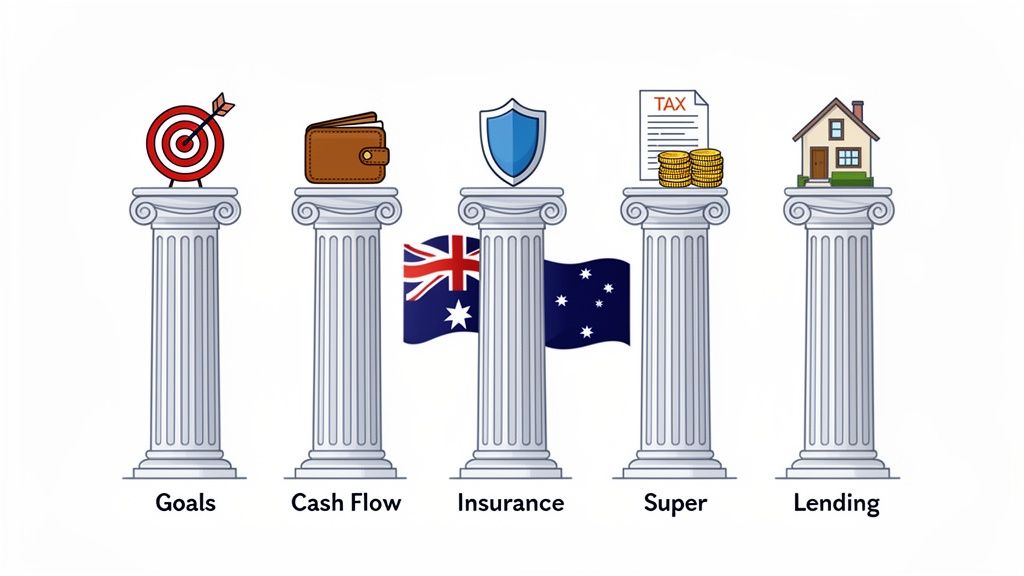
A robust financial plan is a structure built on several interconnected pillars, each designed to function within Australia's unique legal, tax, and economic framework. They are not separate towers, but foundational supports that, when integrated, create a structure capable of weathering life's seasons.
Goal Setting and Cash Flow Management
The process often begins with two foundational questions: "What do we wish to achieve?" and "Where is our money currently going?" Clear, measurable goals—such as acquiring a commercial property, funding university fees, or achieving a specific retirement income—give the entire plan its purpose.
In parallel, a proper cash flow analysis tracks income and expenses, revealing your capacity to pursue those goals. For a specialist consultant earning Personal Services Income (PSI), this may involve mapping income streams against practice expenses and tax obligations. For a family, it could mean understanding household spending to identify opportunities for saving and investment. This groundwork is essential; without it, any strategy remains theoretical.
Tax Planning and Structuring
In Australia, sound financial management is intrinsically linked to effective tax planning. This pillar is not about speculative schemes; it is about structuring your affairs in a compliant and efficient manner under Australian Taxation Office (ATO) guidance.
Depending on your circumstances, this may involve:
- Choosing an appropriate structure: Operating as a sole trader, company, trust, or a combination of these has significant implications for tax liabilities and asset protection. A business owner, for instance, might use a family trust to compliantly distribute income to adult family members, potentially lowering the family's overall tax obligations.
- Navigating PSI rules: For many professionals, determining if the ATO’s Personal Services Income rules apply is critical. If they do, certain tax deductions are limited, a factor that must be incorporated into any cash flow or tax forecast.
A well-designed plan considers these elements from the outset, ensuring financial decisions are made with a clear view of their tax impact.
Superannuation and Retirement Planning
Superannuation is often the cornerstone of retirement savings, governed by its own set of rules and opportunities. With the Superannuation Guarantee (SG) legislated to reach 12%, building a sufficient nest egg generally requires proactive management over many years.
This pillar extends beyond employer contributions. It can involve strategies such as making additional concessional or non-concessional contributions, selecting appropriate investment options within your fund, and determining whether a retail, industry, or self-managed super fund (SMSF) is suitable for your needs. For those approaching retirement, it also means planning the transition from accumulating wealth to drawing a tax-effective income stream.
Investment and Lending Strategy
An investment strategy is an engine for potential wealth growth, but it should be guided by your goals and risk tolerance, not market sentiment. A sound plan outlines an asset allocation that is appropriate for your timeline. A younger professional, for example, may have a higher capacity for risk and a longer investment horizon, while someone nearing retirement might adopt a more conservative approach.
Your approach to lending and debt should be equally strategic. This can involve:
- Structuring mortgages effectively: Using tools like offset accounts or splitting loans may provide flexibility and reduce interest costs over time.
- Managing debt levels: The plan should map out a clear strategy for repaying non-deductible debt (like a primary residence mortgage), which can free up cash flow for investment.
Risk Management and Estate Planning
These final pillars provide protection and peace of mind. Risk management is about identifying potential threats to your financial wellbeing—such as illness, injury, or death—and implementing measures to mitigate their impact. This typically involves personal insurances, such as life, total and permanent disability (TPD), and income protection cover.
Estate planning deals with the responsible transfer of your assets. It extends beyond a simple will and may involve testamentary trusts, binding death benefit nominations for your superannuation, and enduring powers of attorney. It is how you ensure your legacy is passed on in accordance with your wishes, in a tax-effective and protected manner.
An effective financial plan is not a collection of separate documents. It is a single, cohesive strategy where tax, superannuation, investment, and estate planning work in concert.
How a Financial Plan Adapts to Life's Chapters
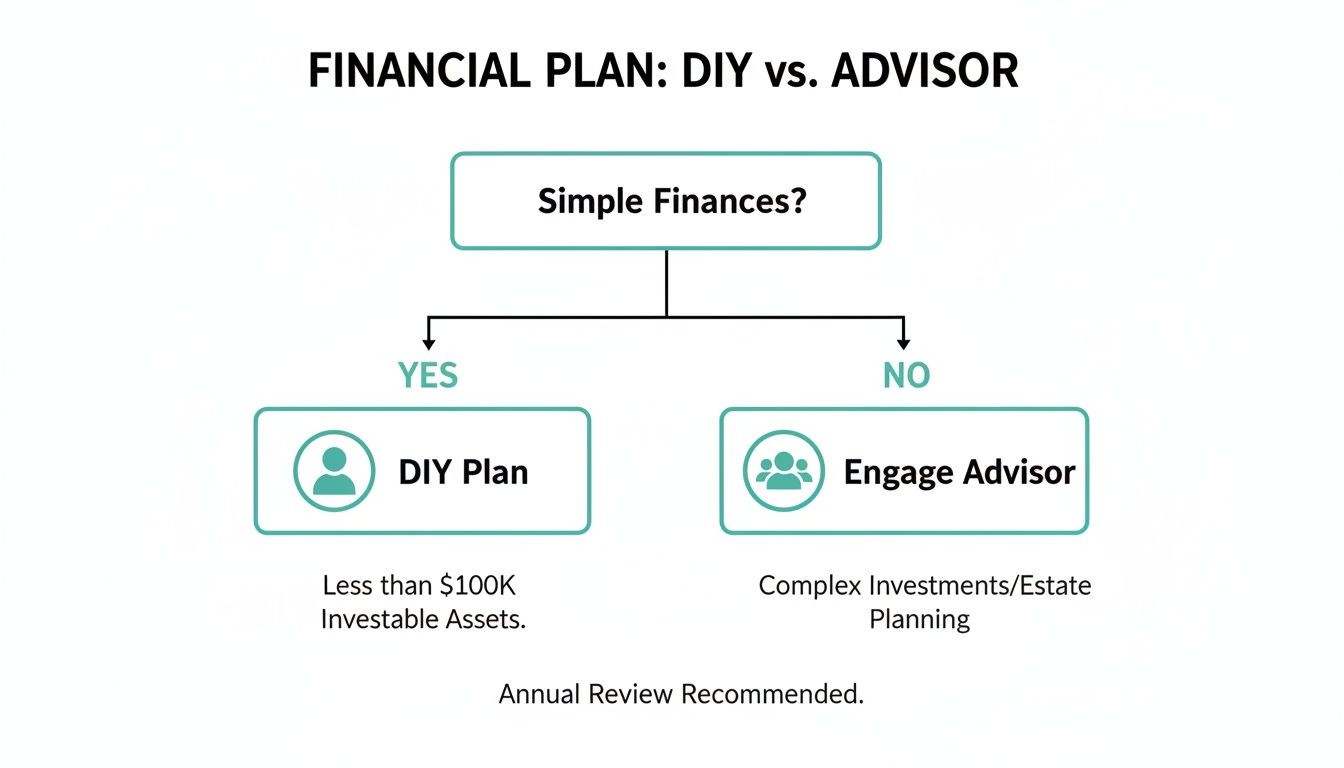
A financial plan is not a static document to be filed away, but a living guide that should evolve with you. Its value lies in its adaptability, offering steady guidance as your personal and professional life unfolds.
For the Young Professional or New Migrant
In the early stages of a career or after migrating to Australia, the focus is often on establishing a strong financial foundation. For a young professional, a plan may centre on managing student debt, building an emergency fund, and starting a disciplined investment program. For a new migrant, priorities might include understanding the Australian tax system, navigating rules around foreign income, and establishing a local credit history. In both cases, the plan provides a clear roadmap for building a secure future in a new chapter of life.
For the Small Business Owner
For an entrepreneur, a personal financial plan is deeply intertwined with the health of the business. The focus naturally shifts to managing cash flow, funding growth, and protecting the enterprise.
Key priorities often include:
- Tax-Effective Structuring: Choosing an appropriate business structure is critical for managing tax and protecting personal assets from business liabilities.
- Cash Flow Management: Ensuring the business has sufficient working capital is vital for meeting obligations and seizing opportunities.
- Succession Planning: It is never too early to consider the eventual transition of the business, whether to family, employees, or an external buyer.
A business owner’s financial plan must serve two masters: personal goals and the strategic needs of the business. An integrated plan ensures both are aligned.
For the Growing Family
As a family grows, so do financial responsibilities. A financial plan must adapt to protect and provide for more people, shifting its focus toward security and long-term goals that may span generations. The plan may centre on funding children’s education, upsizing the family home, or ensuring adequate protection is in place. This is where risk management becomes paramount. A sudden illness or accident should not derail a family’s future.
At every stage of life, a well-considered financial plan provides stability and foresight. It allows you to act with quiet confidence, knowing your decisions are part of a larger, deliberate strategy.
Risks, Responsibilities, and Taking the Next Step
A financial plan is a powerful tool, but it is important to understand its realities. It is less a guarantee of specific outcomes and more a sophisticated roadmap for making sound, considered decisions over a lifetime. Financial maturity comes from understanding both the potential for growth and the discipline required to navigate challenges.
Market Realities and Your Responsibilities
Even the most meticulously crafted plan operates in a world of constant change. Investment markets have cycles, and governments alter rules around tax and superannuation. A robust plan does not attempt to predict these shifts but builds a diversified and resilient strategy designed to weather them over the long haul. Regular reviews are essential to keep your strategy relevant.
While an adviser can be your guide, the success of any strategy hinges on your commitment. A financial plan is a partnership built on trust, open communication, and a shared commitment to disciplined action.
Practical Next Steps
The journey begins with simple, practical actions.
- Gather Your Documents: Collect your key financial paperwork, including bank and loan statements, superannuation records, tax returns, and insurance policies.
- Define Your Aims: Write down what you want to achieve in the short term (1–3 years) and the long term (5+ years).
- Create a Financial Snapshot: List your assets (what you own) and your liabilities (what you owe) to calculate your current net worth.
This groundwork provides the raw material for building a strategy that truly reflects your life. For those who wish to understand how these pieces are woven into a cohesive strategy, a review of professional Financial Planning Services may provide valuable context.
If you would like clarity on how these principles may apply to your own circumstances, you may wish to speak with a qualified adviser. You can contact Everglow to arrange a discussion.
General Advice Warning: The information provided in this article is general in nature and does not take into account your personal objectives, financial situation, or needs. You should seek personal advice before acting on any information contained herein.
Want help applying this to your situation?
Every situation is different. Book a time with our team to talk it through, or call us on 1300 913 929.