

When navigating the world of trusts and the careful stewardship of assets, a corporate trustee is a company established for the specific purpose of acting as the legal trustee for a trust. Instead of appointing an individual—such as a family member or a trusted friend—to manage the trust's assets, a proprietary limited company is established to take on these legal and fiduciary duties. This structure immediately creates a clear, professional separation between personal affairs and the trust's responsibilities.
This approach provides a framework for sound governance, encouraging thoughtful and disciplined management over the long term.
Understanding the Role of a Corporate Trustee
A trust can be thought of as a vessel, carefully constructed to hold and protect valuable assets for its beneficiaries. While an individual can certainly captain this vessel, a corporate trustee is akin to a professional shipping company. Its sole purpose is to navigate the often complex waters of asset management, follow the map laid out in the trust deed, and ensure the assets are handled with diligence for the long haul.

This structure introduces a layer of professional governance that may be valuable in many Australian circumstances. It establishes a distinct legal entity that is not affected by the personal circumstances, health, or lifespan of any single person. For families, business owners, and new migrants alike, this built-in stability is one of the primary reasons this path is often considered for significant financial structures.
Key Features of a Corporate Trustee
In practice, using a corporate trustee brings several core characteristics that set it apart from having an individual at the helm. Understanding these features is a practical first step in seeing how this structure might fit into your financial planning.
- Legal Separation: The company, as trustee, legally holds the trust assets on behalf of the beneficiaries. This draws a clear line between the trust’s property and the personal assets of the company's directors.
- Perpetual Succession: A company does not have a finite lifespan. If a director resigns, retires, or passes away, the company continues its existence as the trustee. This may ensure seamless management without the potential complexity of legally changing the title on every single trust asset.
- Professional Governance: The directors of the corporate trustee are bound by duties under both the Corporations Act 2001 (Cth) and state-based Trustee Acts, which formalises the standard of care required in their role.
If these concepts are new, understanding the fundamentals is a good place to start. Our guide on how trusts work can help build that foundational knowledge. It helps to clarify why the choice of trustee is such a critical decision, often reflecting a long-term strategy focused on asset protection, administrative clarity, and enduring stewardship.
The Core Duties and Fiduciary Responsibilities
When a corporate trustee is appointed, its directors step into a role with significant legal and ethical weight. Under Australian law, from state-based Trustee Acts to the federal Corporations Act 2001, these duties are not mere suggestions—they are strict, enforceable standards designed to protect the trust and its beneficiaries.
At the very heart of these obligations is the fiduciary duty. This is more than managing money; it is a profound commitment to stewardship. It is a legal requirement for the trustee to act with the utmost good faith and loyalty, always prioritising the interests of the beneficiaries as defined in the trust deed.
A Practical Australian Example
Consider a medical professional in Brisbane who establishes a family trust with a corporate trustee. The directors of this company are the professional and their spouse. In this scenario, their duties might look like this:
- Prudent Investment: They would need to invest the trust's funds—perhaps profits from the medical practice—in a sensible manner. This generally means aiming for steady, diversified growth, rather than speculating with the trust’s capital.
- Diligent Property Management: If the trust were to own a commercial property, they would be responsible for ensuring it is properly maintained, insured, and tenanted. Neglecting these tasks could be considered a breach of their duty of care.
- Fair Distributions: At the end of the financial year, when deciding how to distribute income, they must follow the terms of the trust deed and consider the needs of all beneficiaries, whether that is funding their children's education or supporting an elderly parent.
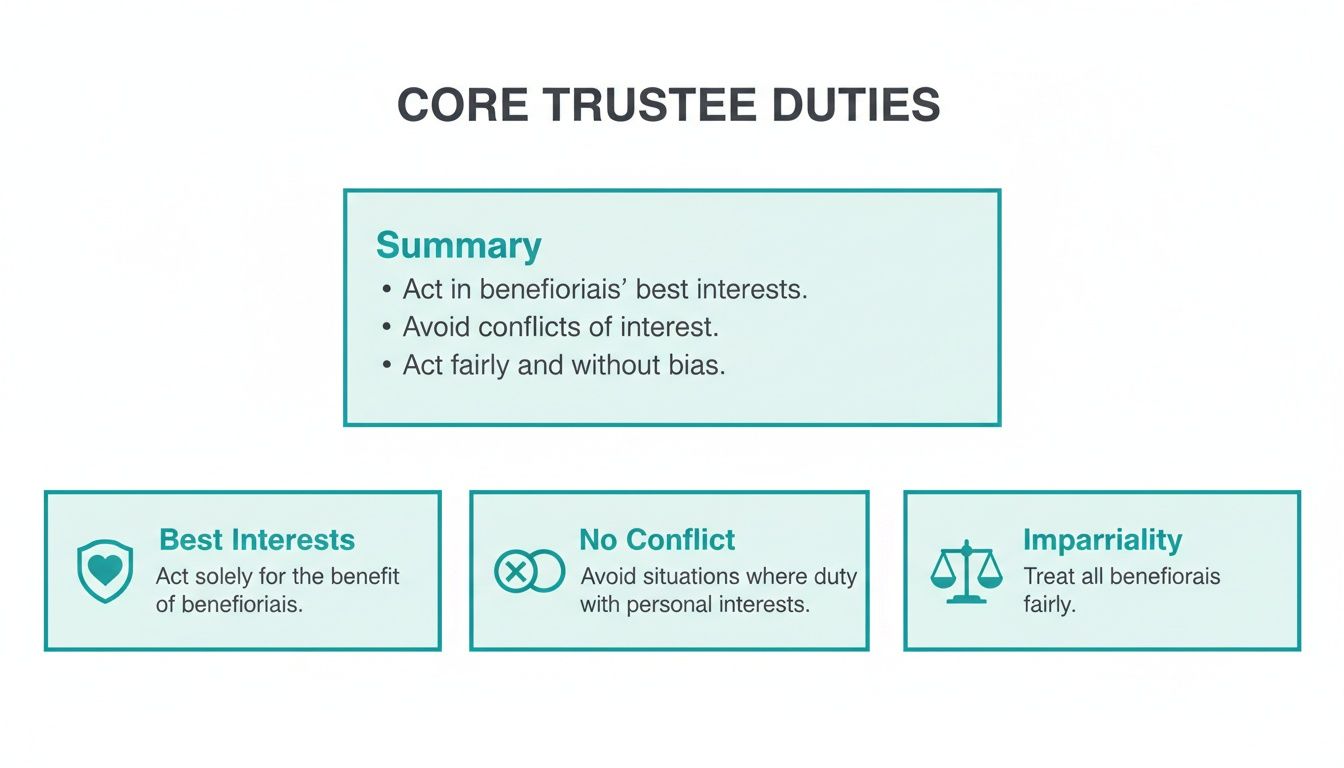
This framework of duties helps ensure accountability. A corporate trustee does not operate in a vacuum; its actions may be subject to review by beneficiaries and oversight from regulators like ASIC and the ATO. This strong regulatory environment is a cornerstone of the Australian system, reinforcing that sound financial decisions come from understanding both risks and responsibilities.
Risks, Responsibilities, and Practical Next Steps
While a corporate trustee structure offers potential benefits, it also comes with distinct responsibilities and costs. It is not a passive arrangement; it requires disciplined action and thoughtful planning over time.
A primary responsibility is compliance. The company must be registered with ASIC as a 'special purpose company' to access lower annual fees. Its directors must obtain a Director Identification Number (Director ID) and ensure the company's details are kept up to date through an annual review. The trust itself has reporting obligations to the ATO, including lodging an annual tax return. Failure to meet these obligations can lead to penalties.
In practical terms, the decision to use a corporate trustee involves weighing the advantages of asset separation and perpetual succession against the costs and administrative duties. For a small business owner, the protection it may offer their family home from business liabilities could be a significant factor. For a family looking at intergenerational wealth transfer, the seamless continuity it provides could be paramount.
Thinking through these areas can bring clarity. It equips you to have a more productive conversation with a professional adviser, who can help you determine if this structure aligns with your financial goals. You can explore our services and contact our advisory team to arrange a discussion.
Concise Takeaway
A corporate trustee is a company established to act as the legal trustee for a trust, offering potential benefits such as enhanced asset protection, perpetual succession, and clearer administration. This structure is grounded in Australian law and requires diligent, ongoing compliance with both ASIC and ATO requirements. The decision to use a corporate trustee should be based on a careful assessment of one's long-term goals, asset complexity, and capacity to meet the administrative responsibilities involved.
If you would like clarity on how these principles may apply to your own circumstances, you may wish to speak with a qualified adviser. You can contact Everglow on 1300 913 929 or email contact@everglow.au to arrange a discussion.
General Advice Warning: The information provided in this article is general in nature and does not take into account your personal objectives, financial situation, or needs. Before acting on any information, you should consider the appropriateness of the information having regard to your own objectives, financial situation, and needs, and you may wish to seek personal advice from a qualified financial adviser.
Want help applying this to your situation?
Every situation is different. Book a time with our team to talk it through, or call us on 1300 913 929.
Book a free first meetingProperty finance and tax guide →Estimate your fees →