

For most individuals lodging their own tax return, one date stands out on the Australian financial calendar: 31 October. This is the deadline to submit your return for the financial year ending 30 June. Understanding this key date is the first step toward managing your tax obligations with quiet confidence.
Decoding the Australian Tax Return Deadline
The Australian tax system operates on a financial year that runs from 1 July to 30 June. This 12-month period is when you earn income and incur expenses. Once 30 June passes, the Australian Taxation Office (ATO) requires you to report on this activity.
Consider 31 October the primary checkpoint. It is the date that applies to most people who prepare and lodge their own tax returns. Meeting this deadline is not merely about compliance; it is about maintaining an organised financial life and avoiding unnecessary stress or penalties.
The Standard Deadline and Why It Matters
The 31 October deadline provides a four-month window after the financial year concludes to gather your documents and finalise your return. For many, this is sufficient time. However, personal and business circumstances can be complex, and more time may be needed for careful preparation.
Missing this deadline can lead to consequences, including late lodgement penalties and interest charges on any tax you may owe. The ATO's guidance is clear: for individuals lodging their own return for the income year ending 30 June, lodgement is due by 31 October. You can discover more insights about the ATO's 31 October deadline directly from the source.
The Role of a Registered Tax Agent
It is important to understand that 31 October is not the only date to be aware of. Engaging a registered tax agent can change your lodgement timeline significantly. When you partner with a professional, you may gain access to a later lodgement date, often extending to May of the following year.
This is not an automatic extension but a structured program the ATO offers to clients of registered agents. There is one crucial condition: you must be on your agent’s client list before the 31 October deadline. This highlights a core principle of good financial stewardship—proactive decisions, rather than last-minute remedies, generally lead to better outcomes.
The next section will explore how your business or entity structure can affect your specific timeline.
Your Business Structure Dictates Your Deadline
While 31 October is the most widely known date, it is a mistake to assume it is a universal deadline. The Australian tax system is nuanced, and your specific lodgement date depends on your business or entity structure. Each structure has distinct compliance timelines set by the ATO.
Understanding these obligations is a cornerstone of sound financial management. It helps you avoid the pressure of a last-minute rush and potential Failure to Lodge (FTL) penalties. Whether you are a sole trader, a partner in a business, or operate through a company or trust, your responsibilities are unique.
The flowchart below illustrates the two primary pathways, highlighting the difference between lodging yourself and using a registered tax agent.
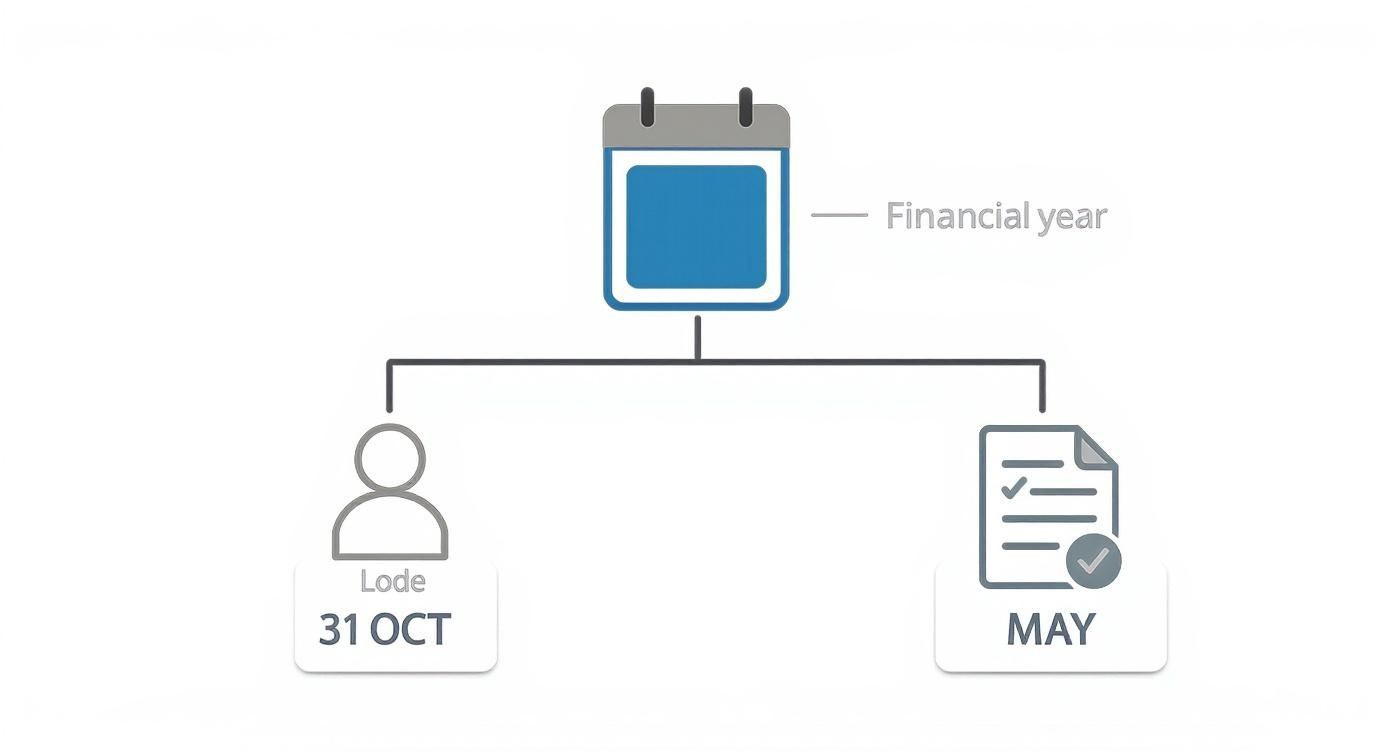
As shown, lodging yourself typically locks you into the 31 October deadline. Engaging a tax agent before this date, however, can extend that timeline significantly, often into May of the following year.
Sole Traders and Partnerships
For a sole trader, your business and personal tax affairs are legally intertwined. If you lodge your own return, your deadline is generally 31 October. This is when you report your business income and claim expenses on your individual tax return. The simplicity of this structure is one of its key appeals; you can explore other advantages of a sole trader in our guide.
Partnerships follow a different rhythm. While the partnership itself does not pay income tax, it must lodge a separate partnership tax return to report its income and expenses. The standard deadline for this is also 31 October. Each partner then reports their share of the net income or loss in their personal tax return, which is due on the same date if they are self-lodging.
Companies and Trusts
Companies are separate legal entities, and their tax deadlines can vary based on their circumstances and compliance history. A new company lodging its first return, or one with a history of late lodgements, may have a 31 October deadline. However, many established companies with a good compliance record may have a lodgement date of 28 February, or even later if using a tax agent.
For example, a new proprietary limited company that commenced business in August would generally be expected to lodge its first company tax return by 28 February of the following year. However, this can vary depending on your circumstances, so seeking personal advice is a prudent step.
Trusts, including family trusts used for asset protection, must also file an annual trust tax return. Similar to partnerships, the trust reports its income, and the beneficiaries declare their share in their personal returns. The standard self-lodgement deadline for the trust return is 31 October.
Self-Managed Super Funds (SMSFs)
Self-Managed Super Funds (SMSFs) operate under a specific set of rules. For a newly established SMSF lodging its first return, the deadline is 31 October. For established funds, the date is typically 28 February. As with other entities, these dates may be extended when lodging through a registered tax agent, often to 15 May. It is vital for trustees to meet these deadlines to maintain the fund’s compliant status with the ATO.
Ultimately, your operating structure defines your tax calendar. It is a reminder of the importance of confirming the specific dates that apply to your situation to ensure you meet your obligations correctly and on time.
How a Tax Agent Changes Your Lodgement Timeline
Engaging a registered tax agent does more than delegate the preparation of your return; it can fundamentally alter your tax compliance calendar. When you work with a professional, you become part of the ATO's lodgement program, which allows for a more flexible, extended timeline.
Lodging your own tax return is akin to meeting a single, fixed deadline. Working with an agent is more like a managed process, guided by an experienced professional who knows the regulations and a later final due date.

The primary benefit is that your tax return deadline in Australia may be extended until 15 May of the following year. This additional time can be invaluable, allowing for more thorough preparation, careful review of all potential deductions, and considered financial planning.
The Critical 31 October Condition
To access this extended schedule, there is one non-negotiable rule. You must appoint your tax agent and be included on their client list before the 31 October deadline. This rule encourages proactive financial management.
Engaging an agent is a strategic financial decision, not a last-minute solution for a looming deadline. The ATO’s system is designed to support those who plan ahead, integrating professional oversight into their financial affairs well before the standard cut-off.
If you miss this key date, you will almost certainly be held to the original 31 October lodgement deadline, even if you engage an agent in November. It is a firm cut-off that helps ensure the agent lodgement program operates efficiently.
Why Your Lodgement History Matters
The ATO's extended lodgement program is based on a history of compliance. Your eligibility for these later dates is not guaranteed; it depends on your lodgement record. If you have a history of late returns or have outstanding tax debts, the ATO may remove you from your agent’s program and revert your deadline to the standard 31 October.
This is why maintaining a good lodgement history is so important. It demonstrates to the ATO that you are a diligent taxpayer, which in turn preserves the flexibility that agents can provide. Disciplined financial habits can create tangible benefits. When considering this path, understanding your responsibilities with a tax agent is a sensible first step.
The significant role agents play is evident in national statistics. Recent ATO figures showed that of the 10.7 million individual returns lodged by late October, tax agents had already submitted over 5.1 million. This underscores how many Australians rely on professional guidance. You can review the complete data in the ATO tax time lodgement statistics.
Partnering with a tax agent can transform your timeline by aligning you with a system that values foresight and a strong compliance history. This relationship provides not just expertise, but also the invaluable asset of time. For those seeking to manage their obligations effectively, exploring our tax and accounting services is a logical next step.
Navigating Penalties for a Missed Deadline
If you have missed a deadline, it is important to understand what happens next to get things back on track calmly. The Australian Taxation Office (ATO) has a clear process for late lodgements, and knowing how it works can empower you to handle the situation and minimise financial consequences.
When a tax return deadline in Australia is missed, the ATO may apply a Failure to Lodge (FTL) penalty. This is calculated based on how overdue your return is. The penalty is measured in "penalty units," a value set by the government.
For individuals and small businesses, the penalty typically accrues for each 28-day period (or part thereof) that the return is overdue, up to a maximum of five periods. This system demonstrates that even a short delay can have financial implications. The size of your entity—whether you are an individual, a small business, or a larger company—will also influence the penalty amount.
Understanding Interest Charges on Unpaid Tax
In addition to an FTL penalty, there is another charge to be aware of: the General Interest Charge (GIC). If you have tax to pay, the GIC is applied to the unpaid amount from the day it was due until it is paid in full. It is calculated daily and compounds, which means interest is charged on the original debt plus any interest already accrued.
The GIC is designed to compensate the community for the delay in receiving funds that support essential public services. It reinforces the principle that it is generally more cost-effective and less stressful to meet obligations on time.
This combination of penalties and interest underscores a simple truth of financial management: proactive planning is preferable to reactive problem-solving. For more detail on how these charges work, our guide on understanding a late tax return fine provides a clear breakdown.
Proactive Steps When You're Running Late
If you anticipate you will not meet a deadline, the most constructive action you can take is to communicate this. The ATO is often more understanding with taxpayers who are proactive in explaining their situation, rather than waiting for a notice to be issued.
You can contact the ATO directly to discuss your circumstances. In cases of serious illness or another significant event, they may grant a deferral or consider remitting (waiving) penalties.
A common path is to work with a registered tax agent. An agent can contact the ATO on your behalf, request a deferral, and help you get your affairs in order. This approach demonstrates that you are taking your responsibilities seriously, which is key to maintaining a good relationship with the tax office.
The timely collection of tax is fundamental to the nation's operations. In the 2023-24 financial year, total tax revenue was approximately AUD 801.7 billion, funding the services we all rely on. You can discover more insights about national taxation revenue on abs.gov.au. Meeting your deadlines is part of this much larger picture.
Your Practical Checklist for a Timely Lodgement
Lodging your tax return on time is not about a last-minute effort. It is the outcome of good habits and methodical preparation throughout the year.
By breaking the process down into small, manageable steps, it can become a simple exercise in good financial housekeeping. This checklist is designed to bring structure to the process, ensuring you can meet the tax return deadline in Australia with confidence.
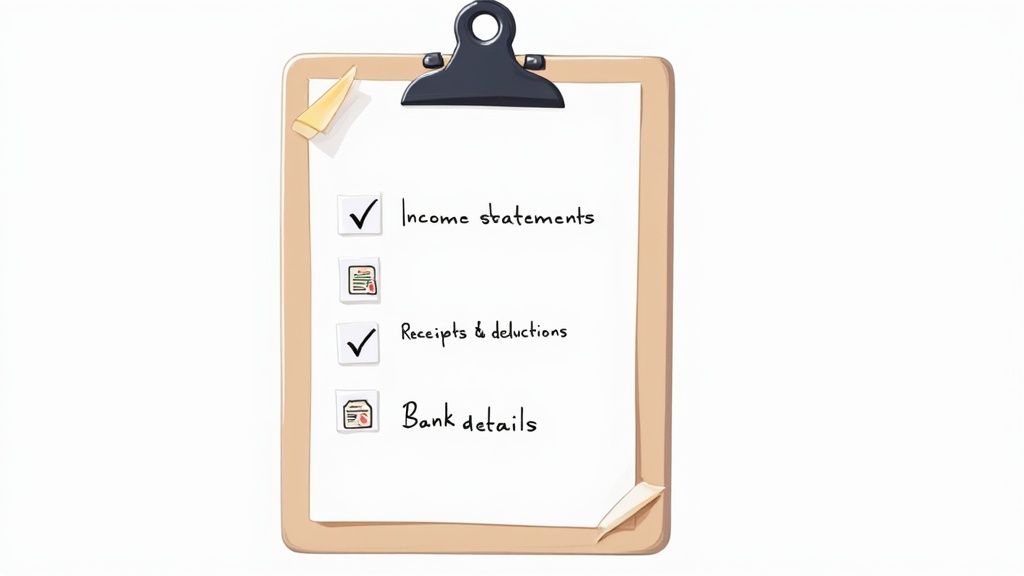
The foundation of a smooth tax season is organised documentation. By gathering and sorting your records as you go, you ensure nothing is missed and every claim you are entitled to is properly substantiated.
Core Documentation for Individuals and Families
Before you or your agent can begin, a core set of documents should be ready.
- Income Statements: Gather all income statements from your employers. While the ATO often pre-fills this data, it is wise to have your own records to verify its accuracy.
- Bank Interest: Collect statements detailing any interest earned on savings accounts or term deposits.
- Dividend Statements: If you hold shares, you will need the dividend statements, which detail both the payment and any franking credits.
- Private Health Insurance: Your annual statement from your health fund is needed to complete the Medicare levy surcharge and private health insurance rebate sections of your return.
Collating Your Deductible Expenses
This is where careful record-keeping throughout the year provides its greatest benefit. The guiding rule is simple: have clear, organised proof for every claim you wish to make.
Good financial stewardship involves more than earning; it means diligently tracking your expenditures. A well-organised set of receipts is not just for tax compliance—it is a clear map of your financial activities, offering insights for future planning.
Here is a breakdown of common deduction categories:
- Work-Related Expenses: This includes receipts for uniforms, self-education, tools, and other items you paid for to earn your income.
- Working from Home Records: To substantiate a claim for working from home, you should keep a logbook of hours and have receipts for relevant utility bills and office equipment.
- Donations: Collect receipts for any tax-deductible gifts made to registered charities.
- Tax Agent Fees: The fee paid to your agent for lodging last year's return is generally deductible in the current year.
Special Considerations for Investors and Business Owners
For those with more complex financial affairs, disciplined record-keeping is a fundamental obligation.
- Investment Properties: Property investors should maintain a comprehensive file for each property. This should include rental income statements, records of all expenses (such as council rates, insurance, repairs, and loan interest), and a depreciation schedule. For further guidance, explore our insights on smart moves for managing an investment property.
- Business Records: As a business owner, you are legally required to maintain meticulous records of all income and expenditure. This includes bank statements, profit and loss statements, balance sheets, and asset registers. Keeping these records current is a core compliance duty.
By working through this checklist, you can build a solid foundation for a stress-free and accurate tax return long before any deadline approaches.
Your Top Questions About Tax Deadlines Answered
It is natural to have questions when navigating your tax obligations. Here, we address some of the most common queries with clear, factual answers grounded in ATO guidance.
I Don't Think I Owe Any Tax. Do I Still Have to Lodge a Return?
This is a frequent question, and the answer often surprises people. The requirement to lodge a tax return is based on your income and other specific criteria, not whether you expect a refund or have no tax to pay. If you earned more than the tax-free threshold, you generally must lodge a return.
Even if you determine you do not need to lodge, it is good practice to formally notify the ATO. By submitting a ‘non-lodgement advice’, you inform them that you have considered your obligations for the year. This simple step prevents the ATO from flagging your return as overdue.
How Do I Find Out My Exact Due Date?
The most direct way to check your personal deadline is by logging into your myGov account and accessing the ATO’s online services. For businesses, this information is available in the ‘Online Services for Business’ portal.
If you are a client of a registered tax agent, they can confirm the date for you, as they operate under a lodgement program that often provides later deadlines. When in doubt, it is best not to guess. A quick check provides the certainty you need. Our tax and accounting services are designed to offer this clarity.
Remember, assuming a deadline is a significant risk. Verifying your specific date is a fundamental act of good financial stewardship, ensuring you remain compliant and in control of your financial affairs.
I Lodge My Own Return. Can I Get an Extension?
If you lodge your own return, the 31 October deadline is generally firm. The ATO typically only grants extensions for self-lodgers in exceptional and unforeseen circumstances, such as a natural disaster or a serious personal illness. You must apply directly to the ATO, and there is no guarantee an extension will be approved.
The most reliable way to secure a later lodgement date is to engage a registered tax agent before the 31 October deadline. This is a planned approach that provides access to the agent’s extended lodgement schedule. Taking this step is prudent for anyone who requires more time to ensure their return is accurate and complete. To see how professional support can assist, you can review our full range of advisory services.
Bringing It All Together: Your Tax Deadline Mindset
View the Australian tax return deadline not as a threat, but as a fixed point on your financial calendar—a cornerstone of your annual financial rhythm. Knowing your date, whether it is the standard 31 October or a later one arranged through your tax agent, is the first step toward proactive control.
Meeting this deadline is the result of steady, disciplined planning. By preparing in advance, keeping records in good order, and knowing when professional support is needed, you can manage your tax obligations with confidence. This approach distinguishes sound financial management from unnecessary stress and potential penalties. The key takeaway is that careful planning and a clear understanding of your responsibilities are the foundations of a smooth tax season.
At Everglow Prosperity, our role is to provide the clarity and strategic foresight you need to manage your tax duties effectively. Discover how our integrated tax and advisory services can support your long-term financial wellbeing.
General Advice Warning: This article provides general information only and does not constitute financial or legal advice. We have not taken your personal circumstances, objectives, or financial situation into account. You should seek professional, personal advice before making any financial decisions.
Want help applying this to your situation?
Every situation is different. Book a time with our team to talk it through, or call us on 1300 913 929.