

Selling a business may be a defining moment in one's financial life. It is often the culmination of years of hard work, personal sacrifice, and dedication. To realise the rewards of this effort, the process may benefit from thoughtful preparation long before a business is brought to market. This can help transform the sale from a simple transaction into a strategic exit designed to support your financial future.
Selling a business is a significant undertaking, and it often demands careful planning well in advance. This early groundwork is more than getting paperwork in order; it is a strategic process designed to demonstrate the business’s value. This preparation can make a business more attractive to potential buyers and may make the eventual due diligence phase a smoother process.
Preparing Your Business for a Successful Sale
Financial Housekeeping and Compliance
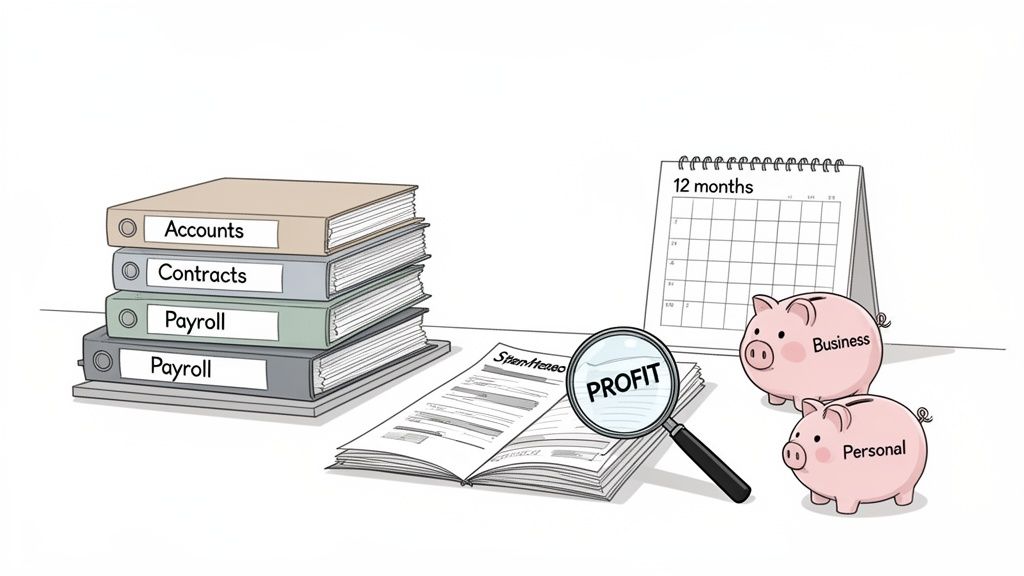
A critical first step is ensuring financial records are in order. This may mean ensuring accounting records are accurate, up-to-date, and compliant with Australian Taxation Office (ATO) and ASIC requirements. A potential buyer will likely want to scrutinise the financial history for at least the last three to five years, looking for clarity and consistency.
For many owners, particularly those running family businesses or smaller enterprises, business and personal finances can become intertwined over time. A buyer needs to see the business as a standalone, profitable entity.
Separating personal from business expenses is not just good practice; it is essential for demonstrating the true, underlying profitability of your operations. This might involve removing personal car expenses, non-business travel, or discretionary family salaries from the profit and loss statement where appropriate.
This process is sometimes known as ‘normalising’ or ‘adjusting’ the financial statements. It aims to present a clear picture of the business’s genuine earning power.
Demonstrating Stability and Organising Key Documents
Beyond clean financials, buyers often look for predictability. Consistent revenue and positive, reliable cash flow may be powerful signals of a healthy, lower-risk investment. Demonstrating this stability can be a key part of your preparation. You may learn more in our guide on small business cash flow management.
A well-prepared business also has its administrative house in order. This could involve gathering and organising all essential documents into a secure, accessible format, often called a digital data room. This portfolio could include:
- Current and historical financial statements
- Business Activity Statements (BAS) and tax returns
- Key customer and supplier contracts
- Property and equipment lease agreements
- Employee contracts and superannuation compliance records
- Intellectual property registrations, like trademarks or patents
This level of organisation can send a powerful message of professionalism and transparency, which may build confidence in potential buyers and help the due diligence process run more smoothly.
The Australian business landscape is always shifting. Recent data from the latest counts of Australian businesses from the ABS shows that while many new businesses are starting up, a significant number also exit each year. For business owners, this highlights the premium that may be placed on businesses that have been professionally prepared for sale.
Thinking about selling a business is not a short-term project. The most successful sales are often the result of patient, disciplined action taken over several years. Starting this preparation early may provide the time needed to optimise operations, strengthen financials, and ultimately present the most compelling version of the business you have worked hard to build.
Valuing Your Business and Structuring the Deal
Before selling a business, you need to understand what it may be worth. This is a grounded, methodical process of looking at your business through a buyer’s eyes, supported by solid financial principles. A credible valuation provides a realistic starting point for negotiations and is the bedrock of a deal structure that aligns with your long-term financial goals.
Common Valuation Methods in Australia
Arriving at a defendable price usually involves more than one approach, as different methods can highlight different strengths of your business. A balanced perspective may come from looking at a few different models to build a comprehensive picture of value.
Here is a look at some common methods used in the Australian market.
| Common Business Valuation Methods Compared |
| :— | :— | :— |
| Valuation Method | Best Suited For | Key Considerations |
| Asset-Based Approach | Asset-heavy businesses like manufacturing, property holding companies, or as a "floor value". | Often overlooks intangible assets like brand reputation, customer goodwill, and intellectual property. May undervalue profitable, service-based businesses. |
| Discounted Cash Flow (DCF) | Businesses with predictable future earnings and a solid history. Favoured by sophisticated buyers and private equity. | Highly sensitive to assumptions about future growth and discount rates. Requires robust financial forecasting. |
| Industry Multiples | Most small to medium-sized enterprises (SMEs) across various sectors. Provides a market-based reality check. | Multiples can vary widely by industry, size, and market conditions. EBITDA is a common metric, but the "right" multiple is often debated. |
Ultimately, a sound valuation may be a justifiable range rather than a single number. Factors that a spreadsheet cannot always capture—such as unique intellectual property or a high percentage of recurring revenue—can significantly shift where a business lands within that range. You may wish to read our detailed guide on how to value a business for sale.
Structuring the Deal for Optimal Outcomes
The price is just one piece of the puzzle. How you structure the sale can be just as critical. A well-designed deal structure may have a significant impact on your final net proceeds, your tax position, and any residual risks.
The most fundamental structuring decision is whether to sell the shares in your company or the assets of the business. This choice has significant tax and legal implications for both you and the buyer, and what is preferable for one party may not be for the other.
A share sale is where the buyer acquires your entire company—assets, liabilities, and history. It can be cleaner administratively and may allow the seller to access valuable small business Capital Gains Tax (CGT) concessions, which could reduce the tax payable.
An asset sale, on the other hand, involves the buyer selecting specific assets. They acquire assets like equipment, client lists, and goodwill, and leave the original company entity with you, along with any liabilities not explicitly transferred. Buyers often prefer this as it may help them avoid unknown liabilities and can offer them different tax treatment on the acquired assets.
Considering Advanced Deal Structures
Sometimes, a straightforward cash deal isn't the best fit. Depending on the buyer and your own goals, you might look at more creative arrangements.
- Vendor Finance: This is where you, the seller, lend a portion of the purchase price to the buyer. It can make a deal happen with a suitable buyer who is short on funding, but it does mean you carry some risk until the loan is fully repaid.
- Earn-Out Clauses: An earn-out makes part of the sale price conditional on the business hitting specific performance targets after the sale. This is a common way to bridge a valuation gap. These clauses require careful drafting to ensure the targets are fair, measurable, and achievable.
The definitive legal document is the contract for the sale of a business. This should be meticulously prepared by experienced legal professionals. Every detail, from the price and payment terms to your post-sale obligations, must be clear to protect your interests and maintain compliance.
Properly structuring a deal is a patient, considered process. It is about finding a balance that maximises your reward while managing your future responsibilities.
Due Diligence and Finalising the Sale
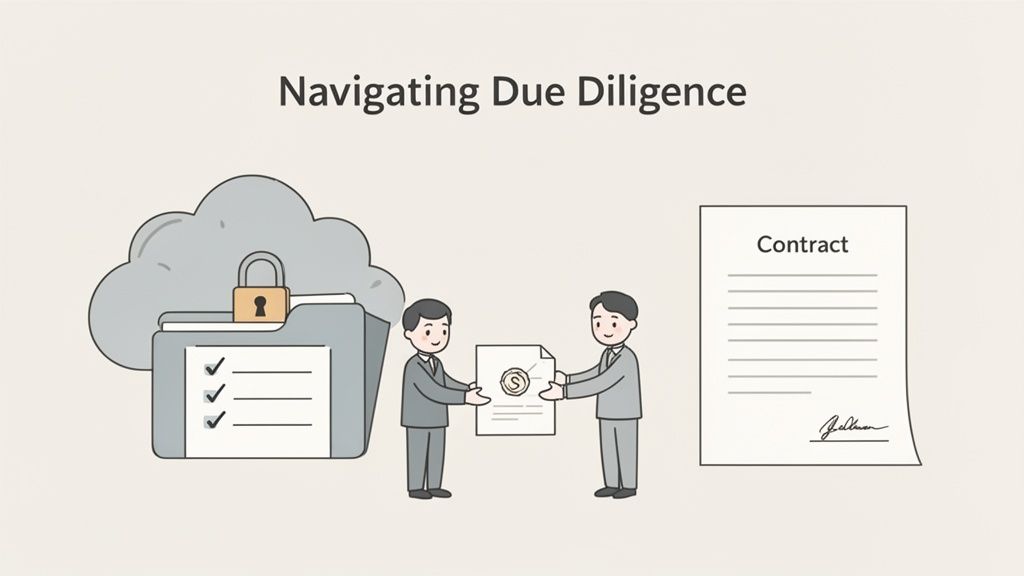
After navigating the road of preparation, valuation, and marketing, a serious buyer may be at the table. This is where you enter the due diligence phase—a period of scrutiny where the buyer and their advisers will examine every facet of your business. This stage can feel intrusive, but it is a standard part of any business sale. The groundwork laid in the early stages—your clean financials and organised documentation—is about to prove its worth.
Managing the Due Diligence Process
Due diligence is the buyer's opportunity to verify the claims made in your Information Memorandum. Their goal is to confirm the business's health and uncover potential risks. Expect detailed requests for information across several key areas:
- Financial DD: A deep dive into your historical and current financial performance, including tax compliance (BAS, FBT returns) and the quality of earnings.
- Legal DD: A review of all legal documentation, including company structure, contracts, leases, and employee agreements.
- Operational DD: An assessment of day-to-day operations, systems, and key personnel.
- Commercial DD: An analysis of your market position, customer base, and competitive landscape.
The most efficient way to manage this information flow may be through a secure digital data room. This online repository allows you to upload relevant documents, provide the buyer's team with controlled access, and respond to queries in an organised way.
A well-organised data room sends a powerful signal of professionalism and transparency. It shows you are prepared and have nothing to hide, which may build trust and maintain deal momentum.
Finalising the Sale and Purchase Agreement
While due diligence is underway, negotiations on the final Sale and Purchase Agreement (SPA) will continue. This is the legally binding contract that codifies every aspect of the transaction. Two of the most heavily negotiated clauses are typically warranties and indemnities.
- Warranties are statements of fact you make about the business at the time of sale (e.g., "The company has paid all its taxes on time"). If a warranty later proves to be untrue, the buyer may have a claim against you.
- Indemnities are promises to cover specific, known risks. For instance, if there is an ongoing legal dispute, you might indemnify the buyer against any losses that arise from it.
These terms define your post-sale risk. It is common for a portion of the sale proceeds to be held in escrow for a period—often 12 to 24 months—to cover potential warranty claims. The specifics demand careful negotiation by your legal team. A professional services firm owner, for example, might provide a warranty that all client work meets industry standards.
For those with established operations, Everglow’s corporate advisory services can provide guidance on navigating this delicate process. Closing the sale involves signing the SPA, transferring funds, and completing all legal formalities to hand over control of the business. It is a moment that calls for steady hands and focus on the final details.
Risks, Responsibilities, and Next Steps
Selling a business is a journey of patience, foresight, and disciplined action. It is the moment you transform years of hard work into financial security. The path is intricate, but it may become manageable with a clear strategy.
The process unfolds across interconnected phases. It often begins years in advance with meticulous financial housekeeping, moves through a grounded valuation and strategic marketing, weathers the intensity of due diligence, and concludes with thoughtful post-sale planning. Each stage builds on the last, reinforcing that a successful exit is rarely a matter of luck.
The Next Chapter: Your Post-Sale Financial Journey
Successfully closing the deal is the beginning of your new role as a custodian of wealth. Your focus will naturally shift from generating business profits to preserving and growing your capital for the long term.
The infographic below illustrates this simple yet critical flow.
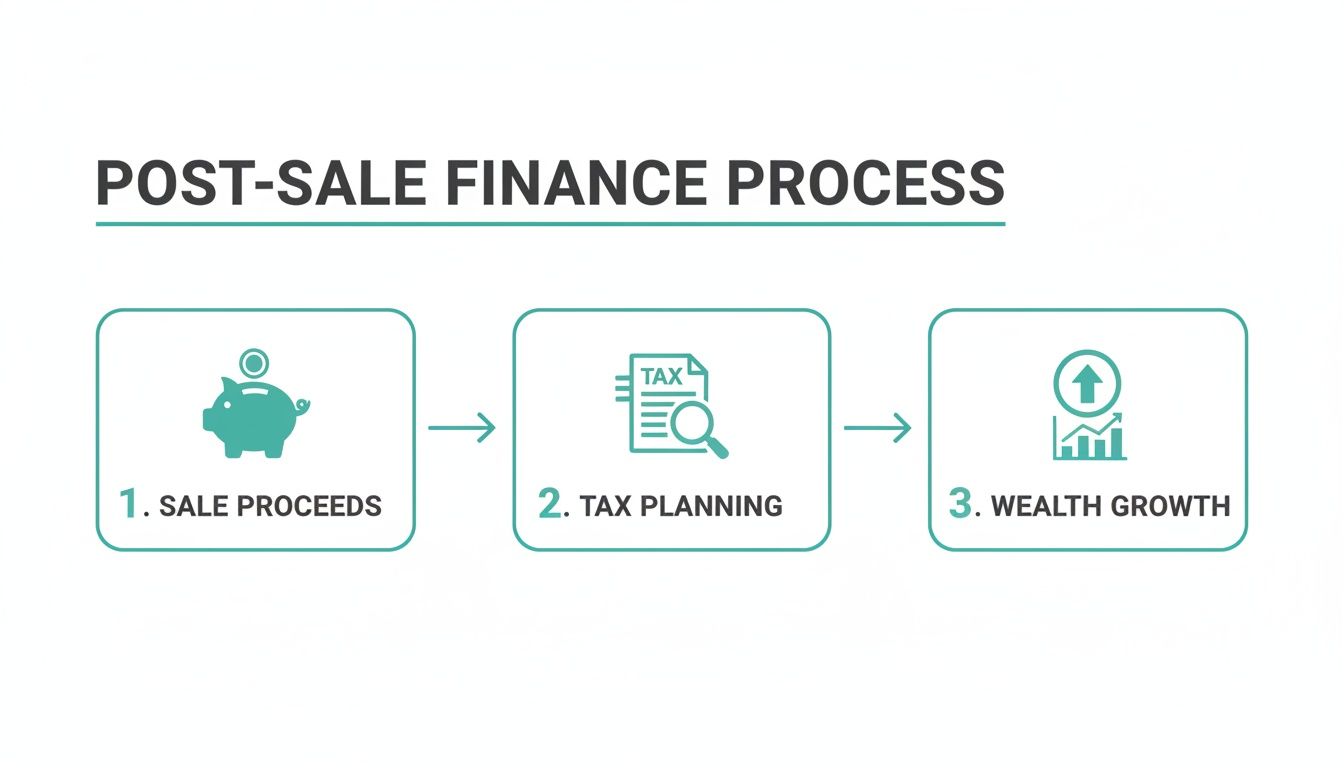
This visual underscores a crucial point: receiving the funds is just step one. Effective tax planning, which may involve considering available Capital Gains Tax exemptions in Australia, is the essential bridge between the transaction and the long-term growth of your wealth.
A Seller’s Core Responsibilities
The responsibility of selling a business extends beyond achieving the highest price. It involves a commitment to a transparent and orderly transition that gives the new owner a solid foundation for success.
Your core duties throughout this process may include:
- Full and Frank Disclosure: Providing accurate and verifiable information about the business’s financial health and operations.
- Maintaining Confidentiality: Protecting the interests of your employees, customers, and suppliers by managing the flow of information discreetly.
- Constructive Negotiation: Working with the buyer in good faith to finalise a fair and comprehensive Sale and Purchase Agreement.
- Prudent Planning: Thinking beyond the sale by structuring your financial affairs with professional guidance. For instance, a new migrant who built and sold a business in Australia may need to consider cross-border tax implications and asset protection strategies relevant to their global circumstances.
A Final Takeaway: Selling a business is not an event; it's a process. The most rewarding exits are rarely rushed. They are often cultivated over time through careful financial stewardship, operational excellence, and a clear vision for the future—both for the business and for yourself.
If you would like clarity on how these principles may apply to your own circumstances, you may wish to speak with a qualified adviser. You can contact Everglow on 1300 913 929 or email contact@everglow.au to arrange a discussion.
General Advice Warning: The information provided in this article is general in nature and does not take into account your personal objectives, financial situation, or needs. Before acting on any information, you should consider the appropriateness of the information and seek personal advice from a qualified professional.
Want help applying this to your situation?
Every situation is different. Book a time with our team to talk it through, or call us on 1300 913 929.