

Navigating the Goods and Services Tax (GST) system is a significant step for almost every Australian business. Understanding if and when you are required to register is a foundational aspect of your financial responsibilities. A measured and compliant approach from the outset ensures you meet your obligations to the Australian Taxation Office (ATO) and avoid complications in the future.
Determining Your Requirement to Register for GST

Before lodging any forms, your first responsibility is to assess your legal obligations under Australian tax law. This is not a matter of choice but a requirement determined by your business turnover. Taking a disciplined approach here is crucial for preventing future issues.
The Mandatory Registration Threshold
The primary trigger for compulsory GST registration is your GST turnover. For most businesses, this threshold is $75,000. If your gross business income, before expenses, reaches or is projected to reach this amount over any consecutive 12-month period, you must register.
A common point of confusion is assuming this aligns with the standard financial year. It does not. The calculation is based on a rolling 12-month period, which requires diligent monitoring of your revenue throughout the year.
Non-profit organisations operate under a higher threshold of $150,000. However, taxi, limousine, and ride-sourcing drivers are a notable exception; they are required to register for GST from the first dollar earned, regardless of their total turnover.
To correctly calculate your GST turnover, you must sum the total value of sales made in the course of your business. According to ATO guidance, you should exclude items such as:
- Sales that are not for payment and are not taxable.
- Sales that are not connected to your business enterprise.
- Input-taxed sales, such as residential rent.
- Sales not connected with Australia.
To summarise these key figures, here is a concise overview.
GST Registration Thresholds at a Glance
| Entity Type | Annual GST Turnover Threshold |
|---|---|
| Most Businesses and Enterprises | $75,000 |
| Non-Profit Organisations | $150,000 |
| Taxi, Limousine & Ride-Sourcing Drivers | $0 (Registration required from the first dollar) |
Keeping these figures in mind is essential for compliance. Remember, the business threshold is based on any rolling 12-month period, not only the 1 July to 30 June financial year. You can seek further information on GST calculations from the ATO to ensure your figures are accurate.
Considering Voluntary Registration
If your turnover is below the $75,000 mark, you may still choose to register for GST voluntarily. This is a strategic decision that requires you to weigh the potential benefits against the increased administrative responsibilities.
The primary advantage is the ability to claim back GST credits on your business-related purchases. For a new business owner, such as a professional photographer investing in cameras and software, claiming the GST on these significant expenses could improve cash flow. For a local family starting a small trade business, this might apply to the purchase of tools or a vehicle.
By registering voluntarily, you introduce a new layer of compliance. You will be required to charge GST on your sales and lodge regular Business Activity Statements (BAS). This is a disciplined practice that must align with your business's capacity for diligent record-keeping.
Whether your registration is mandatory or voluntary, it is a decision that will reshape your financial processes, from bookkeeping to pricing. This underscores the importance of careful, forward-thinking planning.
Preparing Your Information for Registration
Before you begin the registration process, a methodical approach is your best course of action. The Australian Taxation Office (ATO) systems are precise, and attempting to proceed with incomplete information can lead to frustration and delays. Diligent preparation is a hallmark of good stewardship.
The cornerstone of your application is a valid Australian Business Number (ABN). You cannot register for GST without one. If you are just starting your enterprise, obtaining an ABN is your first practical step. It is your business's unique identifier for all government interactions.
Core Business and Personal Details
With your ABN secured, you must collate a clear picture of your business for the ATO. This is about ensuring the identity of your enterprise precisely matches what is held on official ASIC and ATO records.
Have this information readily available:
- Your legal business name: This must be identical to the name recorded on the Australian Business Register.
- Your business structure: Are you operating as a sole trader, partnership, company, or trust? Your obligations may differ depending on your structure. Understanding the advantages of a sole trader structure can be a helpful starting point.
- Proof of identity: You will require key details from official documents, such as your driver’s licence or passport, for verification.
- Your personal Tax File Number (TFN): This is a mandatory requirement. It allows the ATO to link your business activities to your personal tax profile.
Setting Up Your Digital Identity with myGovID
To interact with the ATO online, a secure digital identity is required. This is established through myGovID, a digital credential you set up on a personal smart device to verify your identity when accessing government services.
Think of myGovID as the key, and Relationship Authorisation Manager (RAM) as the system that defines what that key can access. After creating your myGovID, you will use RAM to link it to your business's ABN. This is a critical step that authorises you to act on behalf of your business in an online capacity. It is a security measure designed to protect your business information.
Choosing Your GST Registration Method
Once your information is prepared, the next step is to decide how you will lodge the application with the Australian Taxation Office (ATO). There are several valid pathways; the most suitable choice depends on your comfort with digital systems and whether you prefer professional guidance.
For many modern businesses, particularly sole traders and those with simple structures, the online method is the most direct. The ATO’s Business Registration Service is a straightforward portal accessed with your myGovID. This method gives you control, allowing you to complete the process at your convenience. If you operate your business this way, our guide on the advantages of a sole trader may offer useful context.
This flowchart shows the key information to have on hand before you begin.

Having your ABN, business details, and myGovID ready makes the registration process considerably smoother.
Engaging a Professional for Registration
Alternatively, many business owners choose to register through a registered tax or BAS agent. This is a prudent option if you are uncertain about any aspect of the process or if your business structure is more complex. An agent can ensure all details are correct, provide advice on the most appropriate registration date, and manage the application on your behalf.
This approach can provide valuable peace of mind. An experienced adviser can often identify potential issues, ensuring your registration is lodged correctly the first time. This is a practical step towards sound financial governance.
You may also register by phone with the ATO, although this is often less efficient than the online portal. You will need all your identifying information, including your ABN and TFN, ready for verification.
A critical decision during registration is selecting your start date. This date determines when your GST obligations officially begin, impacting both the GST you must charge and the GST credits you can claim.
The Importance of the Correct Start Date
The date you choose for your GST registration to become effective is legally significant. If you are registering proactively before reaching the threshold, you can often set the date from today or a future date.
However, if you have already crossed the $75,000 turnover threshold, you are required to backdate your registration to the date you first exceeded, or were likely to exceed, the threshold. Backdating means you will be liable for GST on all taxable sales made since that date, even if you did not include it in your pricing.
While this creates a liability, it may also allow you to claim GST credits on business-related purchases made during that same period. If you find yourself in this situation, seeking personal advice from a qualified professional is highly recommended to navigate your obligations correctly.
Your Ongoing Responsibilities After Registering for GST
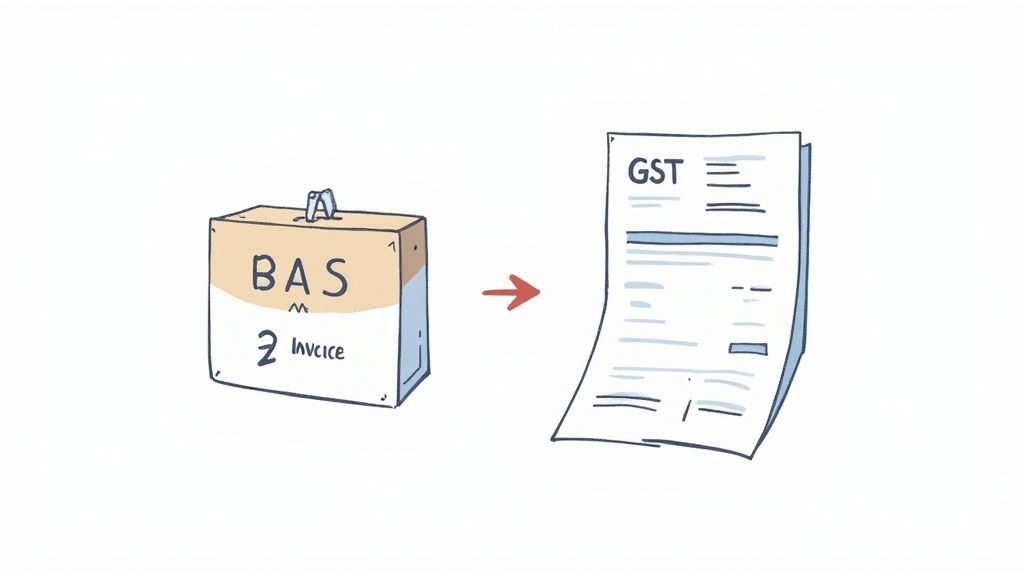
Registering for GST is not the finish line; it is the beginning of a new operational rhythm for your business. This is where sound financial habits become a regular practice, keeping you compliant with Australian tax law and supporting the financial health of your enterprise. Understanding these duties from the outset is key to managing them with quiet confidence.
The central pillar of your ongoing GST responsibilities is the Business Activity Statement (BAS). This is the form you will use to report and pay the GST collected, and, importantly, to claim back the GST paid on your business purchases.
Lodging Your Business Activity Statement
Most new businesses lodge their BAS quarterly, and the ATO will typically place you on this cycle upon registration. However, if your annual turnover reaches $20 million or more, you will be moved to a monthly lodgement schedule. It is crucial to be aware of your cycle and adhere to the due dates to avoid penalties.
Issuing Compliant Tax Invoices
Whenever you make a taxable sale over $82.50 (including GST), you are legally required to provide your customer with a tax invoice. This is a fundamental component of the GST system.
A valid tax invoice must contain specific information to be compliant with ATO requirements:
- It must be clearly stated that it is a "Tax Invoice".
- It must show your business name and ABN.
- The date the invoice was issued.
- A brief description of the items sold, including quantity.
- The GST amount, which can be shown per item or as a total.
Without a compliant tax invoice from you, your business customers cannot claim a GST credit on their purchase, which is a critical link in the system.
Claiming GST Credits Correctly
One of the significant benefits of GST registration is the ability to claim back the GST included in the price of goods and services you acquire for your business. These are known as GST credits or input tax credits.
To claim a credit, the purchase must be for your business, and you must hold a valid tax invoice from your supplier. This is why meticulous record-keeping of all business-related purchases is so important—it serves as your evidence should the ATO require it.
Correctly claiming these credits reduces the total GST you must pay and can make a material difference to your business's cash flow. For a comprehensive look at what you can claim, our guide on small business tax deductions provides valuable insights.
Mastering these three core duties—lodging your BAS on time, issuing correct invoices, and diligently claiming credits—is fundamental. It transforms compliance from a burden into a predictable and manageable part of your business operations.
Different Rules for Different Businesses
While the core principles of GST registration are uniform, their application can vary depending on your business structure and industry. Understanding these specifics is a key part of sound financial management, ensuring your tax strategy is appropriate for your unique circumstances.
One of the first significant decisions for a small or medium business is whether to account for GST on a cash or accrual basis. On a cash basis, you report GST in the period you physically receive payment for a sale or make payment for a purchase. Accrual accounting means you report GST when an invoice is issued, which may be well before any money changes hands. This choice can have a considerable impact on your cash flow.
Navigating Specific Industry Rules
Some industries have unique GST rules that override the standard turnover thresholds. This is particularly relevant in the transport sector.
Ride-share and Taxi Operators: Under Australian tax law, if you provide taxi or ride-sourcing services, you fall into a special category. You must register for GST from the very first dollar you earn. The standard $75,000 threshold does not apply.
Non-Profit Organisations: These entities benefit from a higher GST turnover threshold of $150,000. However, the rules around what constitutes income and which activities are GST-free can be complex. For a deeper look into these unique obligations, our guide on how to start a non-profit organisation offers a helpful framework.
Guidance for PSI Earners and New Migrants
If you are a professional earning Personal Services Income (PSI), the ATO has specific rules that apply to you. GST applies to your income as it would for any other business, but understanding how it interacts with the separate PSI rules for deductions is vital for accurate reporting.
New migrants and businesses with overseas investors may also face a distinct set of challenges. For instance, a new migrant starting a consulting business needs to understand not only the GST threshold but also how to invoice international clients, who are generally not charged GST.
For example, a business importing goods to use in its operations can often claim the GST paid at the border as a GST credit on their BAS. Understanding this from day one is essential for managing import costs and maintaining healthy cash flow.
Ultimately, whether you are a local contractor, a newly arrived entrepreneur, or part of a community organisation, taking the time to understand your specific obligations is a mark of a well-run enterprise. It positions your business for steady, compliant growth.
Common Questions About GST Registration
Navigating the path to GST registration often raises practical questions. Gaining clear, grounded advice on these points helps build the confidence needed for sound financial management. Here are some of the most frequent queries from business owners.
Can I Register If My Turnover Is Below $75,000?
Yes, you can. Voluntarily registering for GST before you reach the mandatory threshold may be a sound strategic decision, particularly for businesses with significant start-up costs or ongoing expenses that include GST.
By registering, you gain the ability to claim GST credits on your business purchases, which could provide a benefit to your cash flow. However, this decision has two sides. You must also begin charging GST on all your taxable sales and commit to lodging regular Business Activity Statements (BAS). It is a case of weighing the administrative duties against the potential financial benefits. It is always wise to seek personal advice to determine if this is the right step for your specific circumstances.
What Happens If I Register for GST Later Than Required?
Realising you should have registered for GST earlier is a situation that requires prompt and careful handling. The ATO's position is clear: you should contact them or your tax adviser as soon as the oversight is identified. Your registration will need to be backdated to the date you were legally required to register.
This action has two key financial outcomes. First, you will be liable for GST on all taxable sales made from that backdated start date, even if you did not charge it to your customers. Conversely, you may be able to claim GST credits on business-related purchases made during that same period. While the ATO can impose penalties and interest, proactively addressing the issue often results in a more favourable outcome.
How Do I Cancel My GST Registration?
You may cancel your GST registration if your business circumstances change significantly. This typically occurs if you sell or close your business, or if your GST turnover falls below the $75,000 threshold and you expect it to remain there.
Before you can begin the cancellation process, there is a critical ATO requirement: all your BAS lodgements must be up-to-date. The process can be managed through your registered tax agent or via the ATO's online services.
It is important to understand the full implications before proceeding with cancellation. You may be required to repay some of the GST credits you previously claimed on business assets you still hold at the time of cancellation. Seeking professional guidance is crucial to ensure you manage the transition correctly and avoid unexpected liabilities. Our article on business closure procedures offers further context.
Concluding Thoughts on Your Next Step
Registering your business for GST is more than a compliance task; it is a milestone. It signifies a new level of operation and a more formal relationship with the ATO. By taking the time to understand the turnover thresholds, preparing your information methodically, and establishing good compliance habits from the outset, you can manage your obligations with quiet confidence. Each step is part of building a solid financial foundation for your enterprise.
General Advice Warning
The information provided in this guide is general in nature and has been prepared without taking into account your personal objectives, financial situation, or needs. Before acting on any information, you should consider the appropriateness of the information in regard to your own circumstances and seek personal advice from a registered tax adviser or financial planner.
Want help applying this to your situation?
Every situation is different. Book a time with our team to talk it through, or call us on 1300 913 929.