

Navigating Australia's tax landscape can feel complex, but at its heart, the principle is straightforward: your assessable income minus your allowable deductions equals your taxable income. Understanding this relationship is the first step toward responsible financial stewardship.
Thinking about how to reduce taxable income isn’t about searching for loopholes. It is about understanding the rules and ensuring your financial decisions are structured in a compliant and considered manner. This guide outlines some of the established pathways available under Australian law that, depending on your circumstances, may help in managing your tax obligations effectively.
Understanding your taxable income
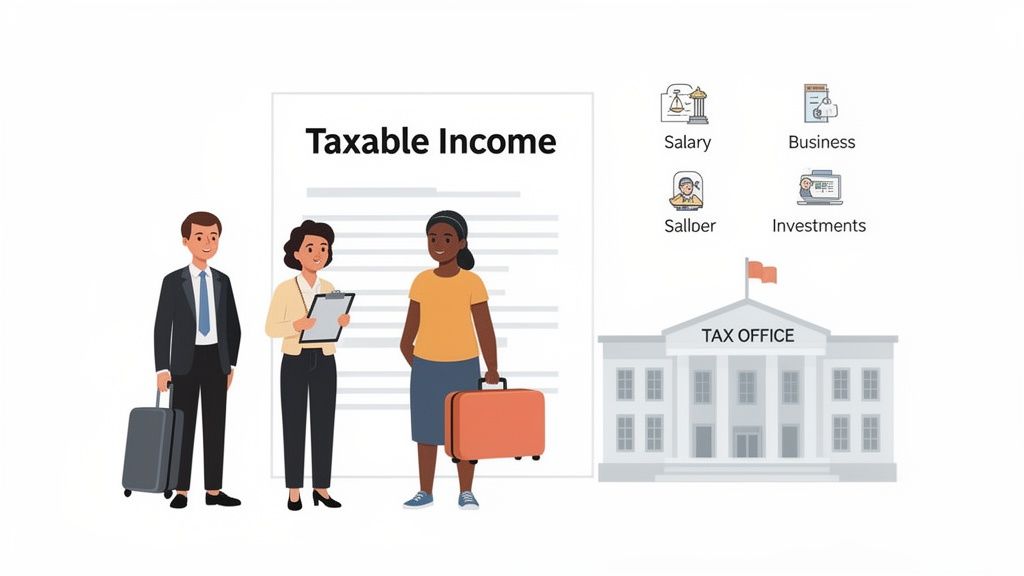
Before exploring any strategies, it is essential to have a clear view of what the Australian Taxation Office (ATO) considers assessable income. Your taxable income is the figure the ATO uses to calculate the tax you are required to pay for a financial year.
This typically includes:
- Employment income: Salary, wages, and allowances from an employer.
- Business or sole trader income: The gross income generated by your business activities, before expenses.
- Investment returns: This may include dividends from shares, distributions from trusts, and interest earned.
- Capital gains: Profit realised from the disposal of assets, such as an investment property or shares.
A foundation of good financial management involves ensuring you are aware of all allowable deductions and entitlements relevant to your situation. For a medical professional operating a private practice, this may mean understanding which specific practice-related expenses are deductible. For a family with a new rental property, it could involve correctly accounting for costs like repairs and interest on the loan.
Your residency status also plays a critical role in your tax obligations. For more detailed information, you can review this guide on how Australian residency for tax purposes is determined.
It’s also prudent to be aware of legislative changes. For instance, adjustments to personal income tax thresholds, such as the widely publicised government tax cuts effective from 1 July 2024, can directly affect your after-tax income. Staying informed allows for more thoughtful planning.
When you shift from simply reacting at tax time to planning proactively throughout the year, you put yourself in a much stronger position to make clear financial decisions. This perspective is the cornerstone of building sustainable wealth.
Utilising deductions and superannuation contributions
A disciplined, year-round approach to your finances may present opportunities to manage your taxable income through allowable deductions and strategic use of superannuation.
Claiming allowable deductions
Deductions directly reduce your taxable income. For most professionals, work-related expenses are a common source of deductions. The ATO’s guiding principle is that an expense must be directly related to earning your income, and you must have a record to substantiate your claim.
Areas to consider may include:
- Self-education expenses: Costs for a course or program with a sufficient connection to your current employment could be deductible.
- Professional memberships: Fees for professional associations or subscriptions to industry publications may be claimable if directly relevant to your work.
- Working from home expenses: With flexible work arrangements common, understanding the rules for claiming these costs is important. You can find a detailed breakdown in our guide to claiming working from home expenses.
- Business expenses: For business owners, deductions can extend to operating costs, asset depreciation, and specific incentives like R&D tax credits for eligible activities.
Diligent record-keeping is not just good practice; it is a legal requirement. A consistent habit of filing receipts and tracking expenses demonstrates a responsible approach to financial management.
Making superannuation contributions

Superannuation can be an effective vehicle for both long-term wealth creation and current-year tax management. Concessional contributions, made from pre-tax income, are generally taxed at a concessional rate of 15% within the super fund (up to a certain threshold), which is often lower than an individual's marginal tax rate.
Two common ways to make concessional contributions are:
- Salary sacrificing: An arrangement with your employer where a portion of your pre-tax salary is paid directly into your super fund. This can be a straightforward way to reduce your taxable income while boosting your retirement savings. For further reading, see the advantages of salary sacrifice.
- Personal deductible contributions: If you are self-employed or your employer does not offer salary sacrificing, you can make personal contributions to your super fund and then claim a tax deduction for those amounts in your tax return.
It is critical to be aware of the annual concessional contributions cap, which for the 2024-25 financial year is $27,500. This cap includes your employer's compulsory contributions. Under the 'carry-forward' provisions, you may be able to use any unused cap amounts from the previous five financial years, provided your total super balance was below $500,000 at the end of the prior financial year. Exceeding the caps can result in additional tax, so careful monitoring is essential.
Structuring business and investment affairs
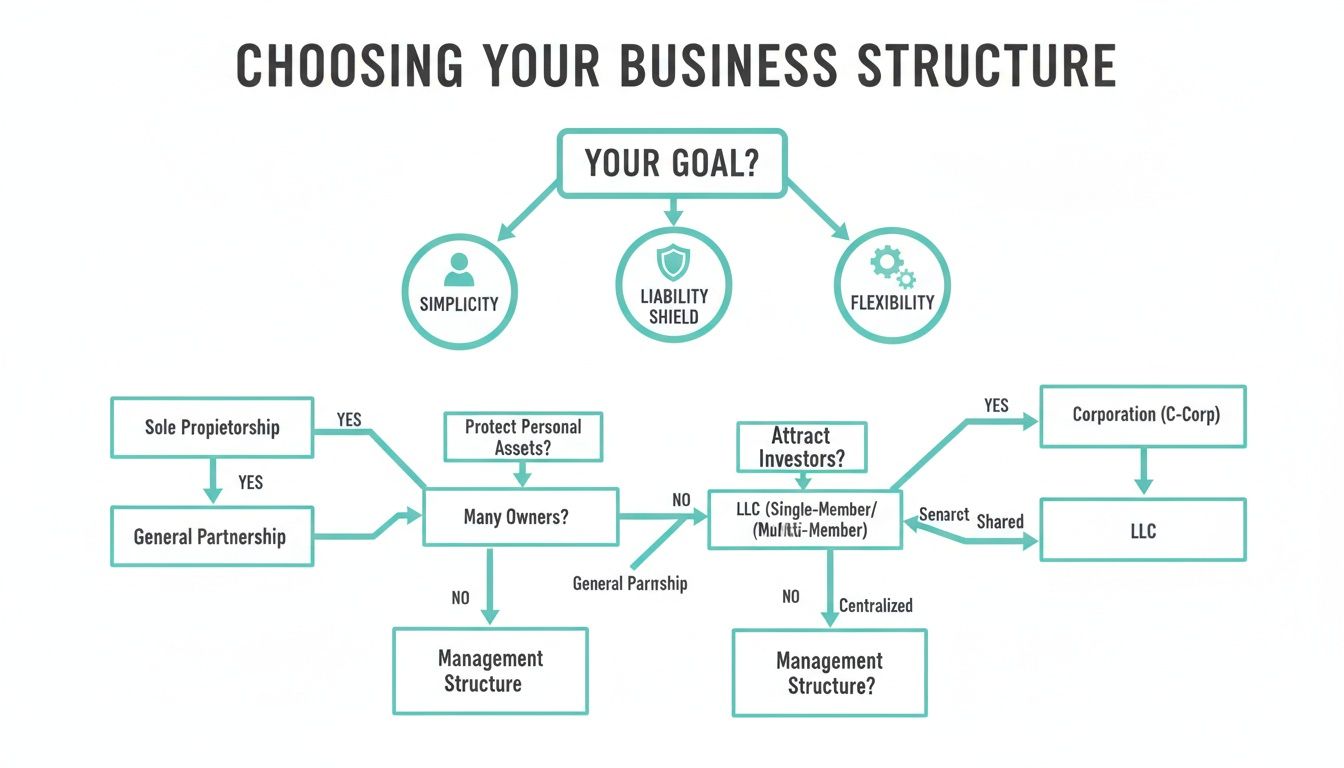
The legal structure through which you run a business or hold investments is a foundational element of your financial world. A well-considered structure can provide asset protection, operational flexibility, and tax-effective outcomes over the long term.
The most common structures in Australia—sole trader, partnership, company, and trust—each have different rules for how income is distributed and taxed.
- A company, for example, is a separate legal entity that pays tax at the corporate rate (currently 25% for eligible small businesses).
- A discretionary trust can offer flexibility in distributing income to beneficiaries, which may be beneficial for a family business. To understand the duties and opportunities, you can learn more about how trusts work in Australia.
The right structure depends on your specific goals, risk tolerance, and compliance capacity. It is also important to be aware of specific ATO rules, such as the Personal Services Income (PSI) rules, which can affect consultants and contractors. These rules may limit the deductions available and prevent income from being split with associates.
Choosing or changing a structure is a significant decision. It can trigger tax events like Capital Gains Tax (CGT) and involves legal and administrative responsibilities. Such a decision should be driven by a clear, long-term strategic purpose, not solely by a desire for a short-term tax benefit.
Timing of income and capital gains
The timing of when you receive income or sell an asset can have a significant impact on your tax liability for a financial year.
For investors, this is particularly relevant for Capital Gains Tax (CGT). If you hold a capital asset, like shares or an investment property, for more than 12 months before selling, you may be eligible as an individual for the 50% CGT discount. This means only half of the capital gain is added to your assessable income. This principle is a cornerstone of many Capital Gains Tax strategies in Australia.
Similarly, if you anticipate a lower income in the next financial year—perhaps due to a planned career break or transition to retirement—deferring the sale of an asset until after 30 June could mean the resulting capital gain is taxed at a lower marginal rate.
For businesses, strategic timing could involve:
- Deferring invoices: Where contractually appropriate, issuing an invoice in early July rather than late June pushes the income into the next financial year.
- Bringing forward expenses: Pre-paying certain expenses for up to 12 months in advance may allow you to claim the deduction in the current financial year.
These strategies require careful planning and must always reflect the commercial reality of the transaction. The objective is responsible management of when tax is paid, not its avoidance.
The most prudent financial decisions are often those that consider not just the immediate outcome, but the long-term trajectory. Timing is a tool for stewardship, allowing you to align tax events with your broader financial life stage.
Risks and responsibilities
Each strategy discussed comes with both opportunities and responsibilities. Sound financial decisions are born from a clear understanding of the rules, risks, and compliance obligations.
- Record-Keeping: The onus is on you to keep complete and accurate records to substantiate any claims you make.
- Compliance: All actions must be fully compliant with ATO, ASIC, and other relevant legal requirements. Aggressive schemes can attract severe penalties.
- Preservation of Super: Money contributed to superannuation is generally preserved for retirement and cannot be accessed for short-term needs.
- Professional Advice: Tax law is complex and subject to change. Acting without appropriate advice can lead to unintended and costly consequences.
True financial stewardship involves patient, disciplined action and thoughtful planning over time.
Practical next steps
Your financial journey is unique to you. The most effective strategies are not about last-minute fixes before 30 June, but are built patiently over time, grounded in a clear understanding of your personal circumstances and long-term goals.
A few practical things to consider:
- Review your financial structure: Does the way your business or investments are set up still align with where you are heading?
- Organise your records: Begin collating documents for potential deductions now to avoid a rush at tax time. Our library of educational resources may assist your planning.
- Assess your superannuation strategy: Check your contributions for the year and consider if any adjustments are appropriate for your retirement plans.
A well-organised financial life is the result of deliberate habits—reviewing, planning, and seeking clarity when the path forward is unclear.
Takeaway
Effectively managing your taxable income is an ongoing process of informed decision-making. By understanding your income and deductions, making strategic use of superannuation, choosing the right structures, and thoughtfully timing financial events, you can build a more resilient financial future in a compliant and responsible manner.
If you would like clarity on how these principles may apply to your own circumstances, you may wish to speak with a qualified adviser. You can contact Everglow on 1300 913 929 or email contact@everglow.au to arrange a discussion.
General Advice Warning: The information provided in this article is general in nature and does not take into account your personal objectives, financial situation, or needs. Before acting on any information, you should consider the appropriateness of the information having regard to your own objectives, financial situation, and needs, and seek personal advice from a qualified financial adviser.
Want help applying this to your situation?
Every situation is different. Book a time with our team to talk it through, or call us on 1300 913 929.