

Establishing a company in Australia is a considered process. It is about more than completing paperwork; it involves creating a legal and financial structure intended to support your business venture over the long term.
This journey primarily involves two key government bodies: the Australian Securities and Investments Commission (ASIC), which oversees corporate regulation, and the Australian Taxation Office (ATO), which administers the nation's tax system. Understanding their roles is the first step toward building a compliant and resilient enterprise.
Laying the Groundwork: Structure and Foresight
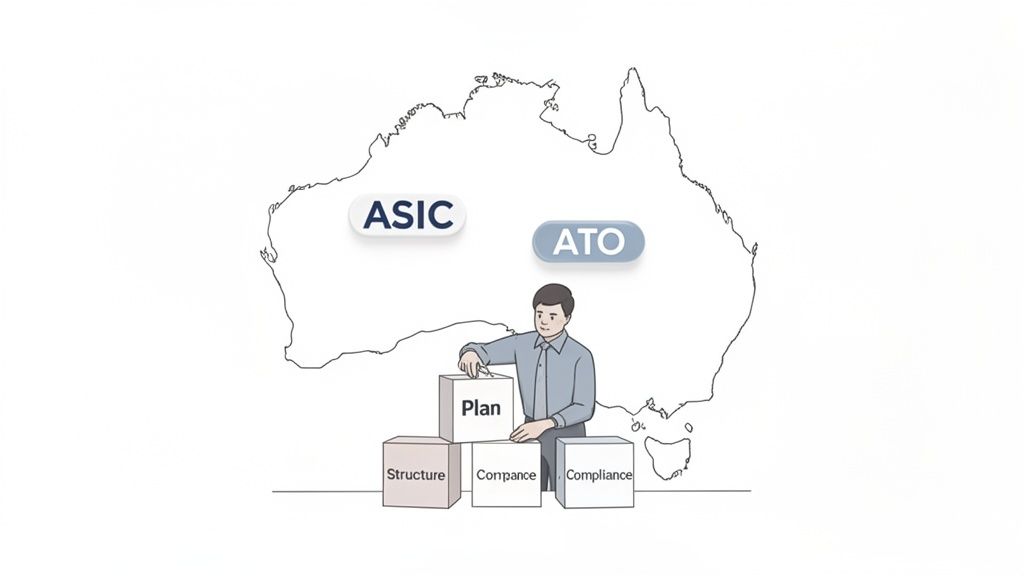
The initial decisions made when establishing a company can have lasting implications. The choice of structure may influence tax obligations, personal asset protection, and the ability to bring on investors in the future. The process is governed by a well-established regulatory framework.
- ASIC is Australia's corporate regulator. It manages company registrations, issues a unique Australian Company Number (ACN), and enforces the Corporations Act 2001.
- The ATO administers Australia's tax system. It issues an Australian Business Number (ABN) and manages registrations for GST and PAYG withholding.
A Considered and Methodical Approach
Choosing the right structure requires foresight. For example, a technology founder may consider a structure that is accommodating to future venture capital investment. A family-run professional services firm, on the other hand, might prioritise a structure that helps protect personal assets from business liabilities. The 'best' structure often depends entirely on individual circumstances.
For new migrants or overseas companies, specific requirements may apply. Understanding these nuances from the outset is important. Our guide on starting a business in Australia as a foreigner provides further educational resources on this topic.
Taking a diligent and thoughtful approach at this early stage sets the tone for a responsible and sustainable business. Exploring ways of slashing legal costs for startups can also be a prudent part of initial planning.
A well-structured company is rarely built by chance. It is often the result of careful planning, a clear vision, and an understanding of one's obligations. Good stewardship begins on day one.
Choosing the Right Business Structure
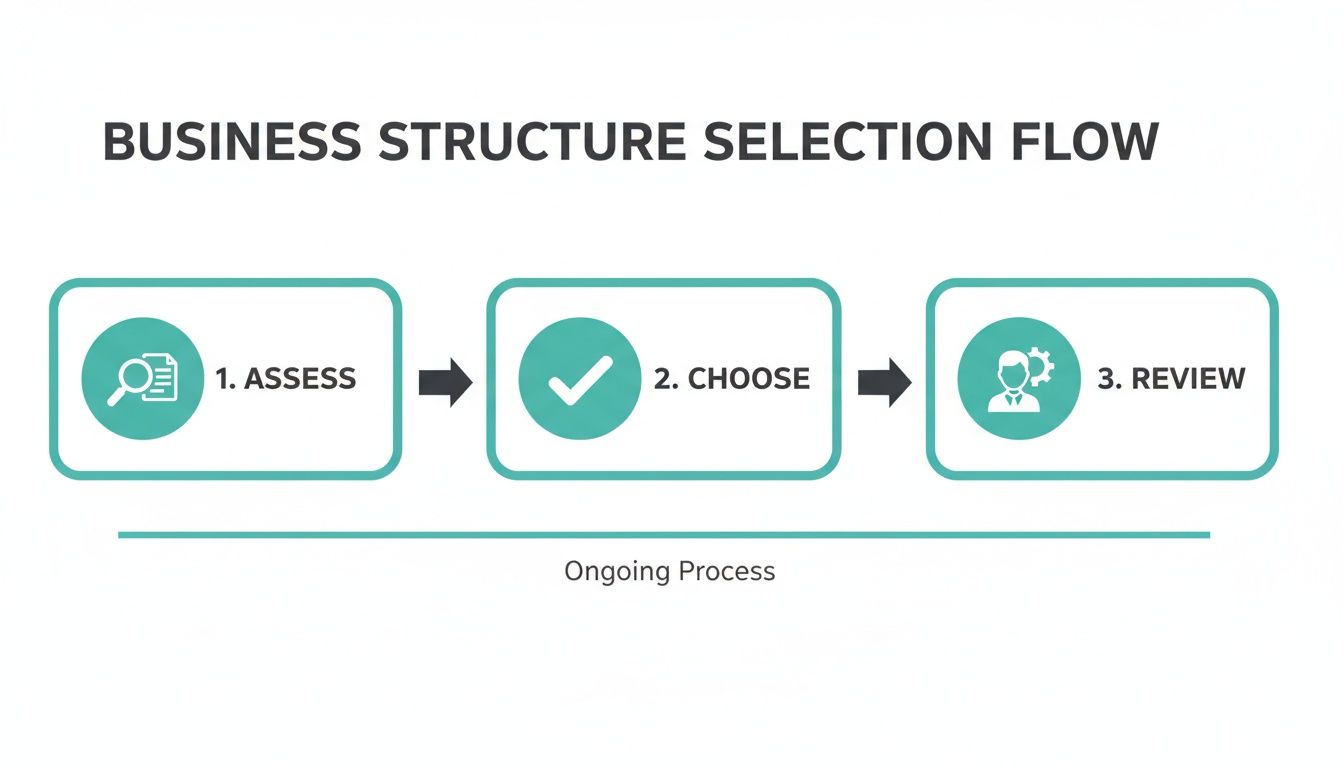
The selection of a business structure is a foundational decision. It can affect personal liability, tax treatment, administrative load, and future capital-raising capabilities. This choice may warrant thinking beyond the immediate term to where the business might be in several years.
For many, the initial choice is between simplicity and protection. While operating as a sole trader is a straightforward path, it is wise to understand its implications. Our guide on what it means to operate as a sole trader explores this structure in more detail.
The Proprietary Limited Company (Pty Ltd)
For many business ventures in Australia, the proprietary limited company (Pty Ltd) is a common choice. Its primary feature is the creation of a separate legal entity, distinct from its owners.
This means the company itself can own property, enter into contracts, and be subject to legal action. Crucially, this structure may help shield personal assets. If the company incurs debts it cannot pay, creditors' claims are generally limited to the company's assets, not the owners' personal property. This protection is known as limited liability.
For instance, a small professional services firm operating as a Pty Ltd faces a commercial dispute. If the matter results in a financial judgment against the business, the claim is typically against the company’s assets. The personal wealth of the directors and shareholders is generally separate, which may be a different outcome than if they were operating as sole traders.
Weighing the Alternatives
While a company structure offers potential protection, it may not be suitable for everyone. It is worth comparing it with other common setups.
- Sole Trader: Simple to establish, as the individual and the business are legally the same. However, the owner is personally liable for all business debts.
- Partnership: Involves two or more people. It is relatively simple to set up, but partners are generally personally liable for business debts, including those incurred by other partners.
- Trust: A more complex structure where a trustee (often a company) holds assets for beneficiaries. Trusts can be effective for asset protection and may offer tax planning flexibility, making them a consideration for family businesses or those holding significant assets.
The right structure aligns with your appetite for risk, plans for growth, and personal circumstances. It is a decision that warrants patience and careful consideration.
Registration and Ongoing Responsibilities
Once a structure is chosen, the next phase involves a series of deliberate steps with ASIC and the ATO to bring the company into legal existence. This process builds the foundation for a fully compliant and operational business. It begins with registering the company with ASIC to receive its unique nine-digit Australian Company Number (ACN).
Following this, the company will require an Australian Business Number (ABN) from the ATO for transacting with other businesses. Depending on circumstances, other registrations may be necessary:
- Goods and Services Tax (GST): Registration is mandatory if annual turnover is projected to be $75,000 or more.
- Pay As You Go (PAYG) Withholding: Required if you plan to hire employees or pay directors' salaries.
Opportunities and Responsibilities
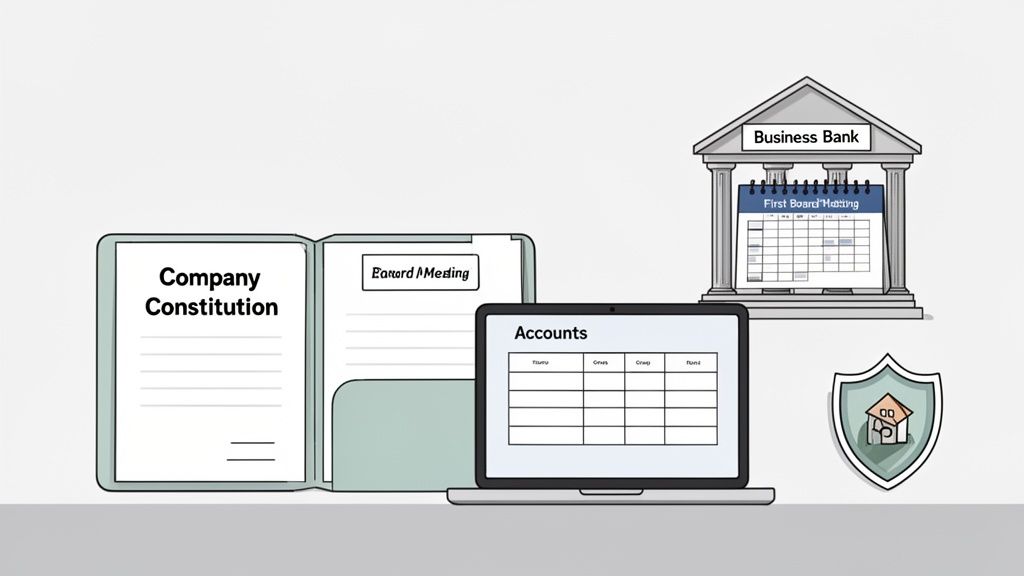
Establishing a company provides opportunities, such as limited liability and a structure for growth. However, it also brings significant legal responsibilities for its directors. These duties, outlined in the Corporations Act 2001, include acting in good faith, exercising care and diligence, and preventing the company from trading while insolvent.
Maintaining accurate financial records using systems like Xero or MYOB is not just good practice; it is a legal requirement. Proper record-keeping is essential for meeting ongoing reporting obligations to the ATO, such as lodging annual company tax returns and regular Business Activity Statements (BAS). For those planning ahead, using a cash flow forecast template can be a valuable tool.
Managing employer obligations, such as superannuation guarantee contributions for eligible employees, is another critical responsibility. Failure to meet these obligations can result in significant penalties.
Practical Next Steps
The journey of building a business is an ongoing discipline. The foundations you establish—structure, governance, and financial systems—require consistent attention to support growth. A professional's perspective can provide clarity on these matters. Everglow’s Business and Corporate Advisory services outline how we may be able to assist businesses in navigating these complexities.
Concise Takeaway
Establishing a company in Australia is a structured process governed by ASIC and the ATO. The key steps involve choosing an appropriate business structure (such as a Pty Ltd company), completing the necessary registrations (ACN, ABN, GST), and understanding the ongoing legal and financial responsibilities of being a company director. Thoughtful planning and a commitment to compliance are central to building a sustainable enterprise.
If you would like clarity on how these principles may apply to your own circumstances, you may wish to speak with a qualified adviser. You can contact Everglow on 1300 913 929 or email contact@everglow.au to arrange a discussion.
General Advice Warning: The information provided in this article is general in nature and does not take into account your personal objectives, financial situation, or needs. Before acting on any information, you should consider the appropriateness of the information in regard to your own objectives, financial situation, and needs, and you should seek personal advice from a qualified professional.
Want help applying this to your situation?
Every situation is different. Book a time with our team to talk it through, or call us on 1300 913 929.
Book a free first meetingProperty finance and tax guide →Estimate your fees →
Keep exploring