
Navigating the Goods and Services Tax (GST) is a fundamental aspect of running a business in Australia. At its core, GST is a broad-based tax of 10% on most goods, services, and other items sold or consumed in Australia. For businesses registered for GST, this involves a disciplined cycle of collecting this tax on behalf of the Australian Taxation Office (ATO) and claiming credits for the GST included in your own business expenses.
Understanding this flow is not merely a compliance task; it is a key component of sound financial stewardship. It requires careful record-keeping, timely reporting, and a clear grasp of your obligations. This guide aims to break down the mechanics of how GST works, offering practical steps and context for Australian business owners, professionals, and families.
The Core Mechanics of GST: Collecting and Claiming
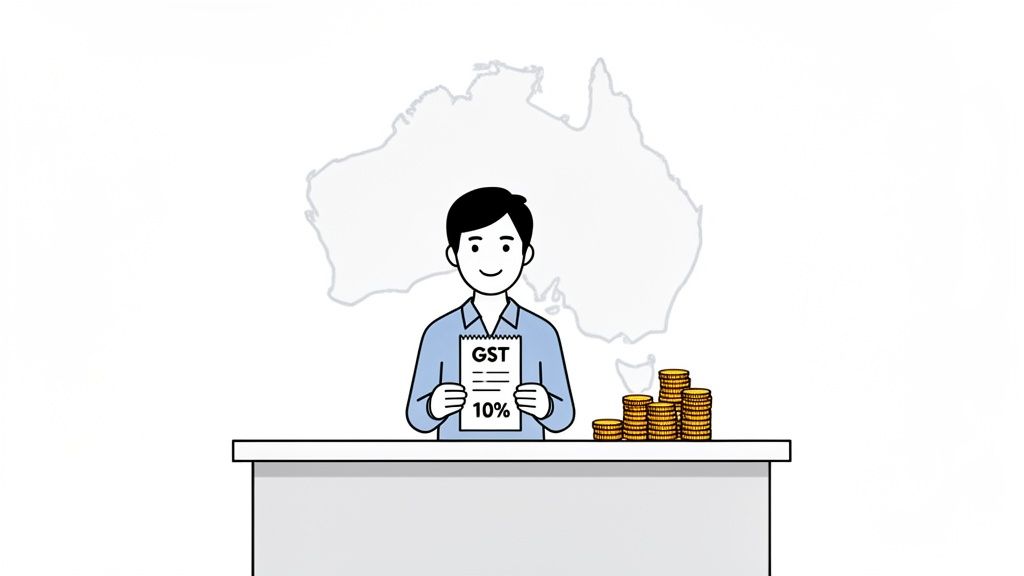
The GST system is designed so that the final tax is borne by the end consumer, not by the businesses within the supply chain. This is achieved through a mechanism of collecting GST on sales and claiming credits for GST paid on business purchases.
In Australia, a business is generally required to register for GST if its annual turnover is, or is expected to be, $75,000 or more. For not-for-profit organisations, this threshold is higher, at $150,000. Once registered, your business begins its role in this tax cycle.
Collecting GST on Sales
When your business is registered for GST, you are required to include 10% GST in the price of most goods and services you sell. This amount is not business income; rather, it is held on behalf of the ATO until it is time to report.
For example, a consultant who is GST-registered provides services valued at $2,000. They must add 10% GST ($200), making the total invoice $2,200. This $200 is the GST collected, which the business will report and remit to the ATO at the end of the reporting period. Issuing a valid tax invoice is a critical part of this process.
Claiming GST Credits
The other side of the GST equation involves claiming credits for the GST included in the price of goods and services you purchase for your business. These are known as input tax credits. This mechanism ensures that tax is only paid on the 'value added' at each stage.
To continue the example, if that same consultant purchases a new office computer for $1,650 (which includes $150 of GST), they may be able to claim that $150 back from the ATO as an input tax credit, provided the computer is used for business purposes.
At the end of each reporting period, the process involves a reconciliation. You calculate the total GST collected on your sales and subtract the total GST credits you are eligible to claim on your business purchases. The resulting figure is either what you pay to the ATO or what you may receive as a refund.
This balancing act is reported via the Business Activity Statement (BAS) and forms the fundamental rhythm of GST compliance.
Distinguishing Between GST-Free and Input-Taxed Supplies
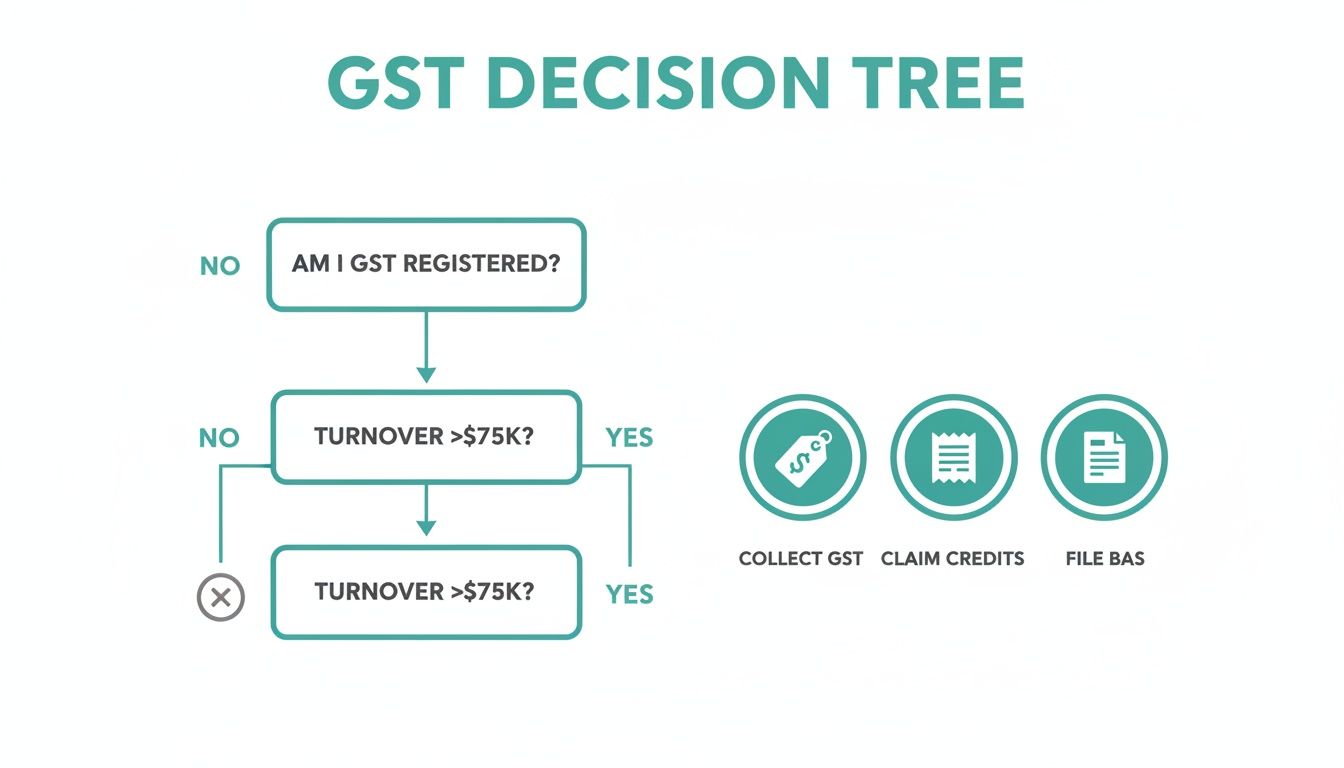
A common area of complexity for business owners is understanding the distinction between supplies that are 'GST-free' and those that are 'input-taxed'. While in both cases you do not charge GST to the customer, their treatment from a tax perspective is significantly different.
GST-Free Supplies Explained
When you make a GST-free sale, you do not add GST to the price. However, you may still claim GST credits for the business purchases related to making that sale. This ensures your business is not out of pocket for the GST embedded in your operational costs.
Common examples of GST-free supplies in Australia include:
- Most basic food items, such as fresh fruit, vegetables, and bread.
- Certain medical and health services.
- Some education courses.
Consider a local medical practice. It does not charge GST on patient consultations. Despite this, the practice can typically claim GST credits on its operational expenses, such as rent for its premises, accounting fees, and the purchase of medical equipment.
Understanding Input-Taxed Supplies
If you make an input-taxed supply, you also do not charge GST to your customer. The crucial difference is that you cannot claim GST credits for the business purchases related to that supply. The GST paid on your expenses becomes a cost to the business.
The most common examples of input-taxed supplies are:
- Financial supplies, such as providing loans or dealing in money.
- The sale or rental of residential property.
For example, a landlord renting a residential apartment does not charge the tenant GST on their rent. Consequently, the landlord cannot claim GST credits on related expenses, like property management fees or the cost of repairs.
For businesses that make a mix of taxable, GST-free, and input-taxed supplies, such as those in the financial services or NFP sectors, careful apportionment calculations may be required. Understanding these distinctions is fundamental to accurate reporting and effective cash flow management.
For more practical guidance, our firm’s educational resources can help clarify these points.
Reporting and Remitting GST via the Business Activity Statement (BAS)
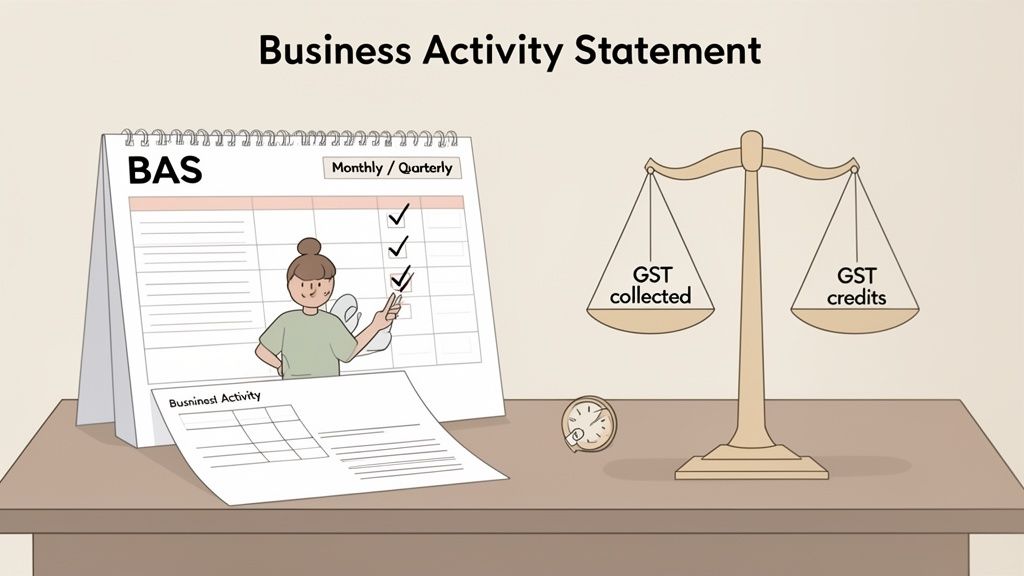
The Business Activity Statement (BAS) is the official form used to report and pay GST to the ATO. It is the practical tool that brings together your GST collections and credits for a specific reporting period. In addition to GST, the BAS often includes other tax obligations, such as Pay As You Go (PAYG) withholding.
The frequency of lodging your BAS—typically quarterly or monthly—is determined by your business's annual turnover and will be assigned by the ATO upon registration. Meeting these lodgement and payment deadlines is a core responsibility of a GST-registered business.
At its heart, completing the BAS involves a simple calculation:
- Total GST collected on sales.
- Total GST credits claimed on business purchases.
The difference between these two figures determines whether you have a net amount to pay to the ATO or are due a refund. This process is entirely dependent on diligent record-keeping. Every figure reported on your BAS should be supported by valid documentation, such as tax invoices and receipts.
Good records are not just for compliance; they are a hallmark of a well-managed enterprise, providing clarity and confidence in your financial position. Professional guidance from our tax and accounting services can assist in establishing robust systems.
Risks, Responsibilities, and Practical Next Steps
Sound financial management comes from understanding both the opportunities and the responsibilities involved. For a GST-registered business, these responsibilities are clear: issue valid tax invoices, lodge your BAS on time, pay any amounts owing by the due date, and maintain accurate records for at least five years.
Failure to meet these obligations may result in penalties and interest charges from the ATO. A more constructive perspective is to view these requirements as the framework for building a resilient and well-governed business.
Practical Next Steps to Consider
- For New and Growing Businesses: If your turnover is approaching the $75,000 threshold, it may be appropriate to prepare your accounting systems for GST registration. Proactive planning can prevent future complications.
- For Established Businesses: A periodic review of your GST processes and classifications can be a prudent exercise. This helps ensure you are correctly categorising sales and claiming all eligible credits.
The principles of GST are manageable, but specific circumstances can introduce complexity. Sound financial decisions are built on a foundation of understanding, patience, and disciplined action.
Concise Takeaway
The Australian GST system requires registered businesses to act as collection agents for the ATO. This involves adding 10% GST to most sales and remitting this amount to the government. Businesses can, in turn, claim credits for the GST paid on their own legitimate business expenses. This entire process is reconciled and reported through the Business Activity Statement (BAS). Navigating these obligations effectively requires diligent record-keeping, a clear understanding of the rules, and thoughtful planning over time.
If you would like clarity on how these principles may apply to your own circumstances, you may wish to speak with a qualified adviser. You can contact Everglow on 1300 913 929 or email contact@everglow.au to arrange a discussion.
General Advice Warning: The information provided in this article is general in nature only and does not take into account your personal objectives, financial situation, or needs. Before acting on any information, you should consider the appropriateness of the information provided, having regard to your own objectives, financial situation, and needs. We recommend you seek personal advice from a qualified professional.
