

Deductible gift recipient status is a formal endorsement from the Australian Taxation Office (ATO). For many not-for-profit organisations, it is a significant milestone, as it allows donors to claim a tax deduction for gifts they make. This arrangement is a cornerstone of philanthropy in Australia, encouraging financial support for a wide range of community purposes.
Understanding how this status works, the responsibilities it carries, and the careful planning required is a foundational step for any organisation considering this path. It is a journey that calls for diligence and a clear sense of stewardship.
The Role of DGR Status in Australian Philanthropy
At its core, deductible gift recipient (DGR) status is a mechanism designed to support the work of eligible organisations across Australia. By allowing donors to claim a tax deduction for their contributions, the government provides an incentive for individuals and businesses to support causes they believe in.

This endorsement often signals a level of trust and regulatory oversight, indicating to the public that an organisation meets specific government standards. For many not-for-profits, achieving DGR status may open up new avenues for fundraising, potentially attracting a broader base of support—from local families contributing to a school building fund to corporations backing a public health initiative.
The Potential Benefits and Attendant Responsibilities
The DGR framework may create a positive cycle for both those who give and those who receive. Appreciating this two-way relationship is central to understanding the role of DGR status in Australia's charitable sector.
For Donors: The primary opportunity is the ability to claim a tax deduction for eligible gifts of $2 or more. This may reduce their taxable income for the year, which could make thoughtful giving more accessible. For instance, a professional earning a steady income might find they can make a more substantial contribution to a local environmental fund knowing it will reduce their tax liability.
For Organisations: DGR status can be a significant asset for fundraising. It may act as a mark of credibility, making an organisation more attractive to philanthropists, grant-making bodies, and corporate sponsors who may limit their support to DGR-endorsed entities.
However, securing DGR status also brings with it a set of ongoing responsibilities. An organisation must demonstrate that its purpose fits within one of the specific categories defined in tax law. It is also required to maintain meticulous records to uphold the trust placed in it by donors and regulators. This is not a 'set and forget' process; it demands careful planning and a deep understanding of compliance obligations. You can explore the unique financial duties of not-for-profits in our guide on accounting for not-for-profit organizations.
Navigating the Path to DGR Endorsement
Obtaining deductible gift recipient status is a structured process that requires careful preparation and a clear understanding of Australian tax law. It is less a simple application and more a demonstration of your organisation's purpose, governance, and long-term commitment.
The journey generally involves three key phases: assessing eligibility, aligning governing documents, and lodging a formal application with the ATO.
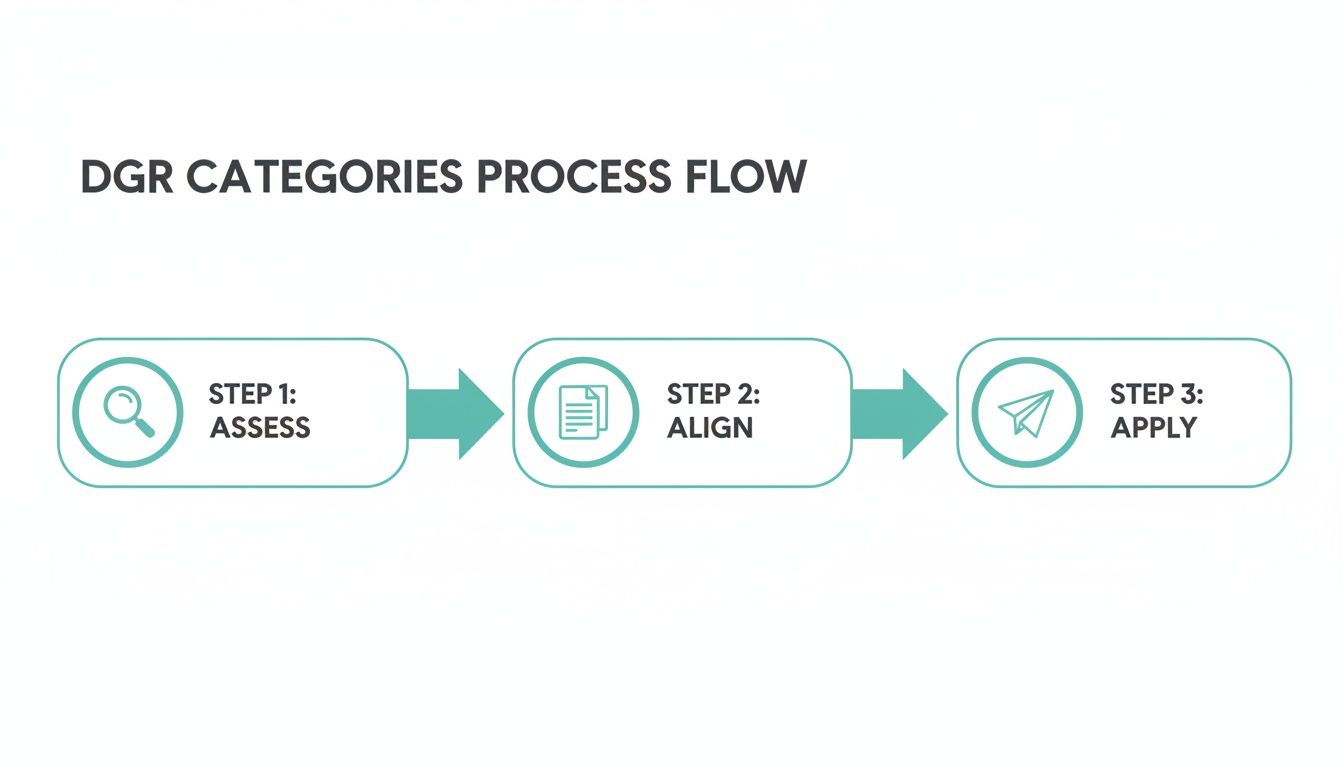
This methodical workflow highlights that the groundwork of internal review and document preparation is often what determines a successful outcome, long before engaging with the ATO.
The Critical Role of Governing Documents
The cornerstone of any DGR application is your organisation's constitution or trust deed. These documents are scrutinised by the ATO to confirm your principal purpose and not-for-profit character. It may be necessary to amend these documents to include specific clauses required by law.
Key provisions may include:
- A Clear Statement of Purpose: The organisation's main objective must be stated in a way that aligns precisely with the wording of a specific DGR category.
- A Not-for-Profit Clause: This confirms the organisation does not operate for the profit or personal gain of its members.
- A Winding-Up Clause: This essential clause must state that if the organisation ceases to operate, any remaining assets will be transferred to another DGR-endorsed entity with a similar purpose.
An application is unlikely to succeed without these clauses. Navigating these requirements can be complex, and depending on your circumstances, professional advice may be appropriate to ensure your documents are compliant.
The ACNC, the ATO, and a Common Misconception
It is important to understand the distinct roles of the Australian Charities and Not-for-profits Commission (ACNC) and the ATO.
Registering as a charity with the ACNC does not automatically grant DGR status. While most DGRs are registered charities, DGR endorsement is a separate tax concession administered by the ATO under the Income Tax Assessment Act 1997.
For many organisations, becoming a registered charity is the first step. The next is to apply separately to the ATO, demonstrating that your organisation's purpose and activities fit into one of the specific DGR categories. This two-step process helps ensure that organisations meet both the governance standards of a registered charity and the specific public benefit tests required for a tax concession. This reinforces that DGR status is a privilege that requires diligent, thoughtful planning. For those in the early stages, our guide on how to start a nonprofit organization may provide useful context.
Maintaining Your DGR Responsibilities
Achieving deductible gift recipient status is a significant milestone, but it marks the beginning of a long-term commitment to good stewardship. Maintaining this endorsement requires diligent, ongoing work to uphold the responsibilities that come with this privilege. This is about honouring the trust that donors and regulators place in your mission.
Good governance is the bedrock of public trust and financial stability. It ensures that donor contributions are handled with integrity and used for the specific purpose for which your DGR was endorsed.

Core Obligations for DGRs
Once endorsed, your organisation has several key responsibilities. These form the practical framework for your compliance and demonstrate your commitment to transparency and accountability.
- Issuing Compliant Receipts: Every eligible gift requires a receipt containing specific information as required by the ATO, including the name of your fund, your ABN, and a clear statement that the receipt is for a gift.
- Maintaining Accurate Records: You must keep detailed financial records that clearly separate DGR funds from other revenue. This is especially important for organisations endorsed for a specific fund, which requires a separate and clearly identified bank account.
- Using Funds Appropriately: Donated funds must be used strictly for the principal purpose for which your DGR was endorsed. Using this money for other activities, even worthy ones, could place your endorsement at risk.
- Annual Reporting: If your DGR is a registered charity, you must submit an Annual Information Statement to the Australian Charities and Not-for-profits Commission (ACNC) each year.
Upholding Donor Trust and Avoiding Pitfalls
Good governance extends beyond simple compliance; it involves building a culture of financial discipline. A potential pitfall for organisations is the commingling of funds, where DGR donations are mixed with general revenue. This can create significant compliance issues and make it difficult to demonstrate that funds were used for their intended purpose.
For example, a small business owner who sits on the board of a local community arts group will appreciate the need for separate accounts. Just as they keep business and personal finances separate, the DGR fund must be distinct from the group's general operating account. This disciplined financial management is essential for maintaining clarity and control. By understanding both the risks and the opportunities, your organisation can make sound decisions that honour donor trust and support its long-term impact.
Practical Next Steps
Embarking on the path toward deductible gift recipient status is a significant undertaking that calls for patience and clear-headed planning. A measured approach ensures that decisions are well-founded.
For organisations, this means a return to fundamentals. It may involve reviewing your governing documents, assessing your mission against a specific DGR category, and ensuring your financial records are in order. This is the foundation of a strong, compliant application.
A patient, planned approach is advisable. Here are a few practical steps an organisation might consider:
- A thorough review of your constitution: Does it contain the required not-for-profit and winding-up clauses?
- An honest assessment of your activities: Do they genuinely fit the legal definition of a DGR category?
- Strengthening financial record-keeping: DGR endorsement brings a higher level of scrutiny. Your financial systems may need to be enhanced to meet these standards.
The rules around DGR status are detailed. If your situation is complex or your board lacks deep experience with these applications, seeking professional guidance may be a component of good governance. An adviser can help clarify obligations, review paperwork with a trained eye, and offer an objective view on eligibility.
If you would like clarity on how these principles may apply to your own circumstances, you may wish to speak with a qualified adviser. You can contact Everglow on 1300 913 929 or email contact@everglow.au to arrange a discussion.
General Advice Warning: The information provided is general in nature and does not take into account your personal objectives, financial situation, or needs. Before acting on any information, you should consider the appropriateness of the information having regard to your own objectives, financial situation, and needs, and you may wish to seek personal advice from a qualified financial adviser.
Want help applying this to your situation?
Every situation is different. Book a time with our team to talk it through, or call us on 1300 913 929.
Book a meetingOur audit and assurance services →See our fees →