

Securing business finance may be a considered step towards growth, seizing an opportunity, or stabilising operations. The lending process in Australia is fundamentally about a lender assessing risk against your capacity to repay. While specific business loan requirements in Australia can differ between lenders, they are generally built on the foundations of financial stability and a credible plan for the future.
This guide explores the principles that underpin lending decisions in Australia, helping you understand what may be required and how to prepare with quiet confidence.
Understanding the Foundations of Business Lending in Australia
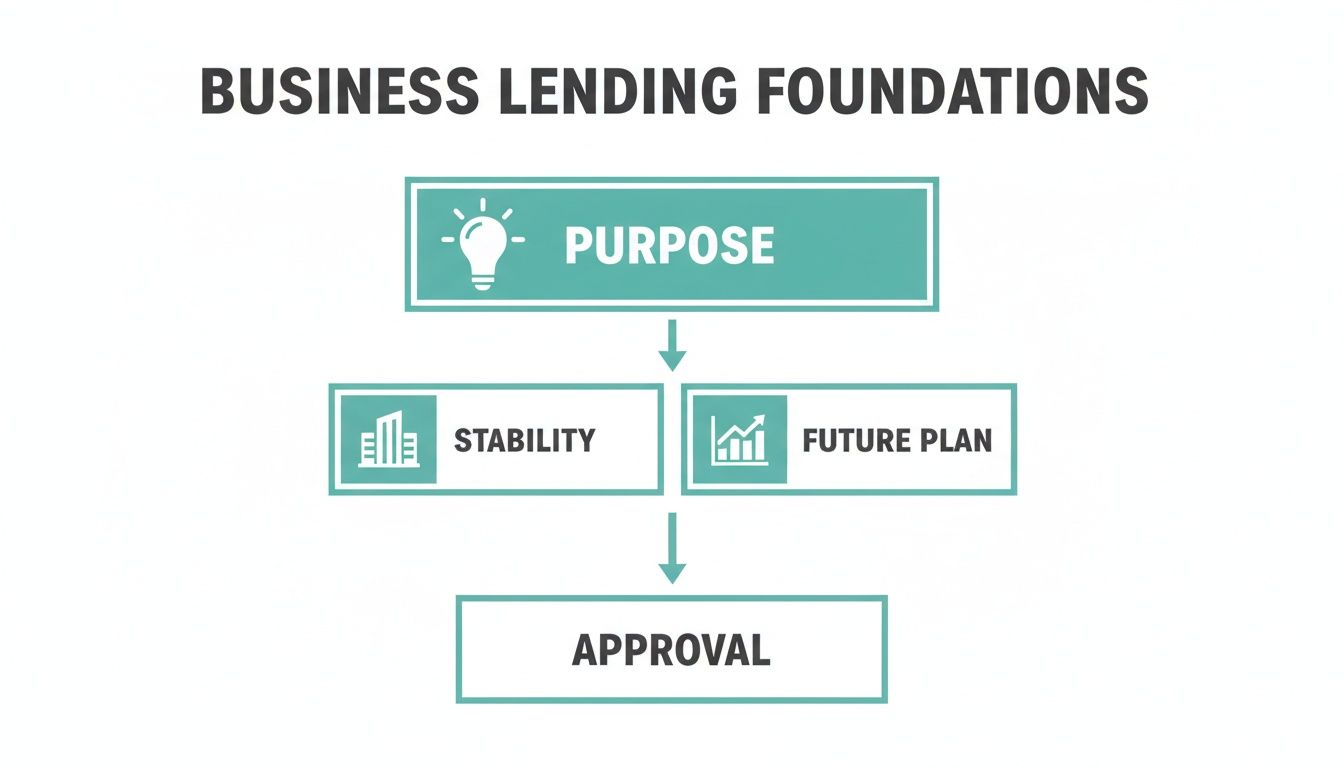
Navigating the world of business finance requires preparation and a clear understanding of what lenders are seeking. Whether you are dealing with a major bank or a newer online lender, they are generally trying to answer three core questions:
- What is the purpose of the funds?
- How has your business performed financially to date?
- How will the loan be repaid?
Answering these questions clearly, with evidence to support your position, is the bedrock of a loan application. This is not just a procedural exercise; it is about presenting your business’s financial story in a way that gives a lender confidence. The broader economic climate may influence the rigour of their assessment, which is why diligent preparation is a prudent first step.
Core Principles of Lender Assessment
While each lender has its own specific criteria, most will focus on a few key pillars. Understanding these may place you in a stronger position.
- A Clear Purpose: Lenders generally want to see that the funds will be put to productive use. Whether it is for purchasing a critical piece of equipment, funding an expansion, or covering a temporary cash flow gap, a well-defined purpose suggests thoughtful planning.
- Demonstrated Stability: Your financial track record is a key indicator. A history of steady revenue and sensible financial management may speak volumes. Your past financial statements and tax records are the primary evidence here. For guidance on this topic, our educational resource on small business cash flow management may be a helpful starting point.
- A Credible Future Plan: The lender will need to be satisfied that you have the capacity to handle repayments over the life of the loan. This might be demonstrated through realistic cash flow projections, signed contracts that indicate future income, or a business plan that maps out a path to growth.
Navigating the lending process can be an exercise in good business health. It encourages a thorough review of your operations, a sharpening of strategy, and the building of a more resilient financial foundation for the future.
Preparing your documents is a process of methodical action. Whether you are a professional managing Personal Services Income, a new migrant building an enterprise, or a long-established local family business, the principles of sound financial stewardship remain the same. The journey to securing finance can be as much about strengthening your own business as it is about completing an application.
Preparing Your Key Application Documents
Your loan application is more than just paperwork; it represents the financial story of your business. A well-prepared set of documents may demonstrate that you are organised, professional, and serious about your future. It can show stability and give the lender a clear picture of your trajectory.
Gathering your documentation before approaching a lender can make the entire process smoother. It is about building a clear, evidence-based narrative of your business's health, which may allow a lender to understand your operational reality and, importantly, your capacity to make repayments.
Foundational Business and Tax Documents
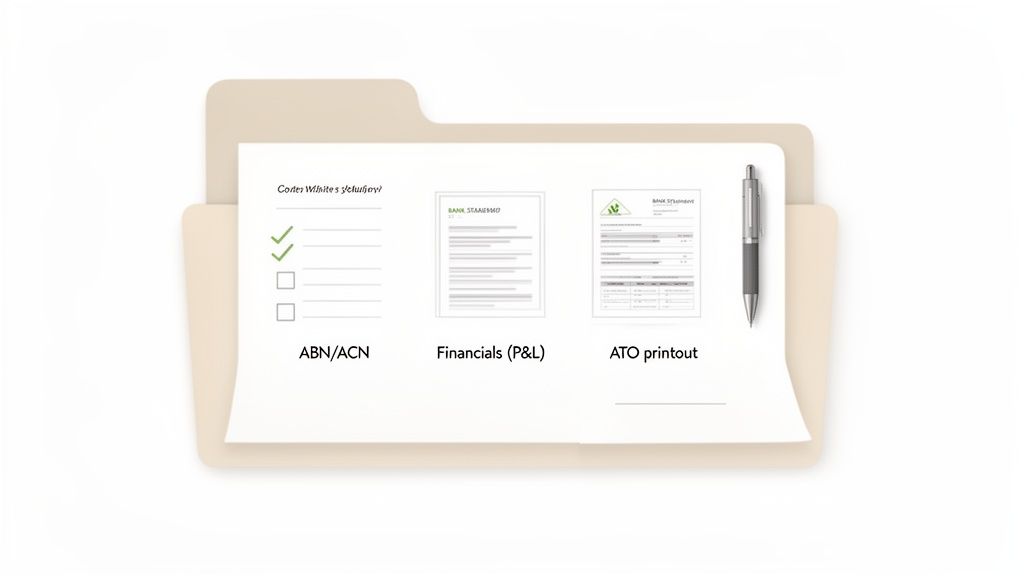
First, you may need to prove your business is a legitimate, compliant entity. These documents are the non-negotiables that form the bedrock of any application.
- Business Identification: Your Australian Business Number (ABN) and, for a company, your Australian Company Number (ACN). These are the unique identifiers that confirm your business is registered.
- Recent Financial Statements: Lenders often wish to see your financial records for the last one to two financial years. This typically includes your Profit and Loss (P&L) statement and your Balance Sheet. It may be prudent to have these prepared by a qualified accountant to ensure they meet Australian standards.
- Tax Compliance Records: You must generally show you are in good standing with the Australian Taxation Office (ATO). Providing your most recent ATO Notice of Assessment and lodged Business Activity Statements (BAS) is a standard way to demonstrate this.
Together, these documents may paint a picture of your business's history and its commitment to meeting its obligations.
Evidence of Operational Health and Future Plans
Once the foundational documents are covered, lenders will want to understand how your business operates day-to-day. This is where you connect the financial data to your operational strategy, showing how the loan will be used and how you will generate the income to repay it.
A lender is, in a sense, partnering with your future success. Your documentation should not only reflect where you have been but also provide a credible map of where you are going. This demonstrates prudence and strategic thinking.
To tell this part of your story, you may need additional documentation. The table below summarises common documents that lenders in Australia may request.
Common Documentation for Australian Business Loan Applications
A summary of typical documents lenders may request to assess a business's financial health. Preparation of these documents may be best undertaken with professional guidance.
| Document Category | Specific Items Often Required | Purpose for the Lender |
|---|---|---|
| Cash Flow Evidence | 6 to 12 months of business bank statements. | To see a real-time view of revenue and expenses, which may help prove cash flow stability. |
| Loan Purpose & Strategy | A concise business plan or loan purpose statement. | To understand how the funds will be used and how that investment could generate repayment capacity. |
| Director's Position | Personal statement of assets and liabilities, recent personal tax returns. | To assess the financial strength of any guarantors, as directors often provide personal guarantees. |
| Legal & Ownership | Trust deed (for a trust), partnership agreement, company constitution. | To confirm the legal structure of the business and who has the authority to borrow on its behalf. |
Having these documents ready is an act of good financial stewardship. It encourages you to gain a firm grip on your own financial position, which is a cornerstone of making sound business decisions.
Risks, Responsibilities, and Next Steps
Securing a loan is the beginning of a new chapter of financial responsibility. It is a commitment that brings with it a clear set of obligations. Meeting these with discipline is fundamental to maintaining a healthy relationship with the lender and keeping your business on a stable footing.
Your primary duty is making repayments on time. However, most loan agreements also include covenants—specific conditions you agree to uphold. These might require you to maintain certain financial ratios or provide the lender with regular reports. Understanding and adhering to these terms is a key responsibility.
A Measured Approach to Moving Forward
Before approaching a lender, it may be wise to take a few practical steps.
- Conduct a Financial Health Check: Take an honest look at your finances. A deep understanding of your cash flow, profitability, and balance sheet provides a clear picture of your capacity to service debt.
- Define the Loan's Purpose: Be precise. What is the money for, and how might it generate a return? This clarity is a critical part of your own strategic planning. A formal strategic loan review can bring focus to this process.
- Gather Your Key Documents: Start collating the necessary paperwork. Having your financial statements, tax records, and business plans ready demonstrates preparedness and professionalism.
For many business owners, seeking professional guidance can help navigate the finer points of the application process with confidence. With careful preparation, meeting the business loan requirements in Australia can be a well-managed process that supports your business for the long term.
Concise Takeaway
Successfully securing a business loan in Australia depends on presenting a clear, evidence-backed story of your business's stability and future capacity. Lenders assess your purpose, financial history, and repayment ability. Diligent preparation, including organising financial and tax documents, demonstrates good stewardship and may strengthen your application. Understanding your responsibilities post-approval is just as crucial as securing the funds.
If you would like clarity on how these principles may apply to your own circumstances, you may wish to speak with a qualified adviser. You can contact Everglow on 1300 913 929 or email contact@everglow.au to arrange a discussion.
General Advice Warning: The information provided is general in nature and does not take into account your personal objectives, financial situation, or needs. You should seek personal advice from a qualified professional before making any financial decisions.
Want help applying this to your situation?
Every situation is different. Book a time with our team to talk it through, or call us on 1300 913 929.
Book a meetingProperty finance and tax guide →See our fees →