

Starting a new venture is a significant undertaking, demanding careful thought and deliberate planning. The business structure you choose is the foundation upon which your future will be built, influencing everything from your tax obligations to your personal liability. For many Australian professionals, consultants, and new business owners, the sole trader model presents a compelling and straightforward starting point. However, its suitability depends entirely on your specific circumstances, commercial goals, and risk tolerance.
This guide offers a measured examination of the primary advantages of a sole trader in Australia. We will ground each point in the practical realities of local regulations, from Australian Taxation Office (ATO) reporting to compliance requirements. The aim is to provide the clarity needed to make a sound, informed decision, not to rush a choice. By understanding both the opportunities and the inherent responsibilities, you can assess whether this structure aligns with your professional or business aspirations. We will explore the key benefits with the seasoned perspective of a trusted adviser, helping you lay a stable groundwork for your enterprise. Let's begin by analysing the first key advantage: complete ownership and control.
1. Complete Autonomy and Control Over Your Business
One of the most significant advantages of a sole trader structure is the absolute autonomy it affords you. As the sole owner, you are the final authority on every business decision, from high-level strategic planning to the daily operational rhythm. There is no board to answer to, no partners to consult, and no shareholder approval required. This direct control means your business vision can be implemented swiftly and without dilution.
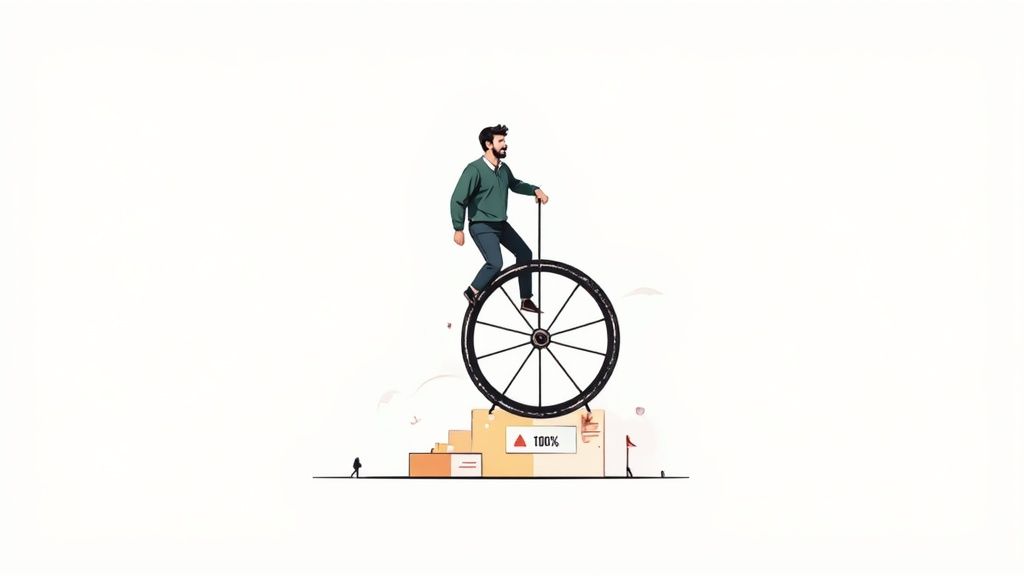
This level of control is particularly appealing for professionals who value independence. For instance, a medical specialist starting a private consulting practice in Sydney can set their own patient fees and clinic hours without needing consensus. Similarly, a new migrant to Brisbane with expertise in IT can offer freelance web development services, retaining all project income and setting their own work schedule to balance personal and professional commitments.
Harnessing Your Autonomy
While freedom is a key benefit, it comes with the weight of total responsibility. Every success is yours to claim, but so is the accountability for every setback. This structure rewards decisive leadership but requires disciplined management. It's crucial to distinguish between personal and business assets, even though they are legally one and the same for tax and debt purposes. In some specific circumstances, understanding asset protection structures, such as learning about the fundamentals of a bare trust, can provide a broader perspective on how assets are held, though you should seek personal advice on its relevance to your situation.
Actionable Steps for Sole Traders:
- Establish a Decision Framework: Even as a solo operator, create a simple framework for making consistent business decisions to avoid emotional or reactive choices.
- Seek External Counsel: For significant financial or strategic moves, engage trusted advisers. A good accountant or business mentor provides an essential external perspective.
- Maintain Meticulous Records: Keep detailed records of all business decisions, income, and expenses. This is not just good practice; it is essential for meeting your ATO obligations.
- Mitigate Personal Risk: As you are personally liable for business debts, it is critical to have appropriate insurance. Depending on your industry, this may include public liability and professional indemnity insurance.
2. Minimal Setup and Registration Requirements
One of the most compelling advantages of a sole trader structure is its simplicity and speed of establishment. Compared to more complex entities like companies or trusts, becoming a sole trader involves significantly less administrative burden and cost. You can often begin operating quickly, a crucial benefit for entrepreneurs eager to start generating income and serving clients without delay.

This streamlined process is ideal for professionals testing a new venture. For instance, a Chinese migrant in Melbourne with a background in digital marketing can register for an Australian Business Number (ABN) online and begin offering consulting services almost immediately. Similarly, a medical practitioner looking to supplement their hospital work with private telehealth consultations can set up their sole trader operation in an afternoon, avoiding the complexities of company registration with ASIC.
Capitalising on Simplicity
The ease of setup is a significant advantage, but it should not be mistaken for a lack of formal responsibility. While the initial steps are minimal, ongoing compliance with Australian Taxation Office (ATO) and other regulatory bodies is mandatory. The core requirement is obtaining an ABN if your turnover is expected to exceed the GST threshold or if you need to provide invoices to other businesses. Understanding your tax obligations from day one is essential for long-term success and avoiding future complications with the ATO.
Actionable Steps for Sole Traders:
- Register for an ABN: If you intend to carry on an enterprise in Australia, applying for an ABN is your first critical step. This can be done online through the Australian Business Register (ABR).
- Determine GST Registration: You must register for Goods and Services Tax (GST) if your business has a GST turnover of $75,000 or more. You can also choose to register voluntarily if your turnover is below this threshold.
- Open a Separate Bank Account: Although not a legal requirement, opening a dedicated business bank account is highly recommended. It simplifies record-keeping, makes tax time easier, and creates a clear distinction between your personal and business finances.
- Check for Licences and Permits: Depending on your industry and location, you may need specific licences or permits to operate legally. Check with your local council and relevant industry bodies.
3. Low Operating Costs
One of the most practical advantages of a sole trader structure is the potential for significantly lower operating costs compared to more complex entities like companies. Without the need for intricate corporate governance, shareholder meetings, or extensive ASIC compliance, you can run a much leaner operation. This simplicity translates directly into reduced overheads, allowing a greater portion of your revenue to be retained as profit.

This cost-effectiveness is ideal for new ventures and service-based professionals. For example, a freelance writer or an independent photographer can establish their business from a home office, incurring minimal setup expenses. Similarly, an online coach or consultant can leverage digital tools to serve clients globally without the financial burden of a physical premises, keeping their operational footprint small and their profit margins healthy.
Maximising Your Financial Efficiency
The sole trader model is inherently streamlined, but maintaining this financial advantage requires disciplined management. The low barrier to entry means you can start earning quickly, but it is vital to control costs from day one to build a sustainable business. By keeping overheads to a minimum, you can build a strong financial foundation, allowing for greater flexibility to invest in growth, manage cash flow during quieter periods, or increase personal drawings. This structure empowers you to run a nimble and profitable enterprise.
Actionable Steps for Sole Traders:
- Minimise Initial Outlay: Start by operating from home if possible to avoid commercial rent. Utilise the wealth of free or low-cost business software for accounting, project management, and marketing.
- Leverage Technology: Automate repetitive administrative tasks to reduce the need for paid support. Tools for scheduling, invoicing, and social media management can save significant time and money.
- Negotiate and Review Expenses: Regularly review all your business subscriptions and service provider costs. Do not hesitate to negotiate better rates or switch suppliers to ensure you are getting the best value.
- Outsource Strategically: While you are the sole operator, consider outsourcing non-core activities like complex bookkeeping or specialist IT support. This is often more cost-effective than hiring an employee, especially in the early stages.
4. Simple Tax Structure and Reporting
One of the most practical advantages of a sole trader structure is its straightforward approach to tax and reporting. Unlike companies that face complex corporate tax returns and compliance obligations, a sole trader’s financial affairs are comparatively simple. Your business income is treated as your personal income, which means you only need to lodge a single individual tax return with an additional business and professional items schedule. This streamlined process can significantly reduce administrative burdens and accounting costs.
This simplicity is particularly beneficial for new ventures. For example, a new migrant in Melbourne starting a small catering business can manage their tax obligations without needing extensive corporate knowledge. Similarly, a physiotherapist opening a solo practice can focus on patient care rather than navigating complex ASIC reporting, as they report their business earnings through their personal tax file number (TFN).
Managing Your Tax Obligations
While the tax structure is simpler, disciplined record-keeping is non-negotiable. The Australian Taxation Office (ATO) requires you to keep detailed records of all income and expenses for at least five years. As your personal and business finances are legally intertwined, it is crucial to maintain separate bank accounts to create a clear financial trail. Diligent bookkeeping not only ensures compliance but also provides clear visibility over your business's financial health and helps you claim all legitimate deductions. It is also important to be aware of your obligations and the serious consequences of non-compliance; understanding the scope of promoter penalty laws for tax and super compliance can provide context on the regulator's stance.
Actionable Steps for Sole Traders:
- Separate Your Finances: Open a dedicated business bank account from day one. This simplifies tracking income and expenses and makes tax time much easier.
- Utilise Accounting Software: Use software like Xero, MYOB, or QuickBooks. These tools are designed for small businesses and help automate record-keeping, invoicing, and expense tracking.
- Understand Your Deductions: Familiarise yourself with what constitutes an allowable business deduction for the ATO. This can include vehicle expenses, home office costs, and professional development.
- Plan for Tax Payments: Since tax is not automatically deducted from your income, set aside a portion of your earnings (e.g., in a separate savings account) to cover your income tax and GST obligations, if applicable. Seeking advice from a tax agent can help you determine the appropriate amount.
5. Flexibility to Scale and Adapt
One of the most practical advantages of a sole trader structure is the immense flexibility it offers to scale and adapt your business. As a sole operator, you can adjust your business model, services, pricing, or operations without needing formal board approvals or complex legal restructuring. This agility allows you to respond swiftly to market changes, act on customer feedback, and seize emerging opportunities, keeping your business dynamic and competitive.
This operational freedom is invaluable in today's fast-paced markets. For example, a digital marketing consultant in Melbourne can quickly pivot from offering general SEO services to specialising in AI-driven marketing automation as client demand shifts. Similarly, an e-commerce seller can test a new product line with minimal overhead or bureaucratic delay, allowing for rapid innovation and market testing without significant risk. This adaptability is a key reason why this structure is so popular.
Capitalising on Agility
While this flexibility is a powerful asset, it requires a proactive and strategic mindset. The ability to change direction quickly is only an advantage if you are attuned to the signals indicating a change is needed. This means staying informed about your industry, listening closely to your customers, and being willing to experiment. You have the freedom to evolve, but the responsibility to guide that evolution rests entirely on your shoulders, which underscores the importance of a clear business plan that also allows for change.
Actionable Steps for Sole Traders:
- Monitor Market Trends: Dedicate time each week to stay informed about industry shifts, new technologies, and competitor activities to anticipate necessary changes.
- Implement Feedback Loops: Actively seek and analyse customer feedback through surveys, reviews, or direct conversations to guide service and product improvements.
- Test and Measure: Before committing to a major change, test new services or products on a small scale. Use the data from these tests to make informed decisions about a wider rollout.
- Plan for Growth: While you can adapt easily, it's wise to have a forward-looking view. Consider what triggers might require you to reassess your business structure in the future, such as hiring employees or seeking investment.
6. Direct Customer Relationships and Personal Brand Building
One of the most compelling advantages of a sole trader structure is the unique opportunity to build direct, personal relationships with your customers. As the face of your business, every interaction contributes to your personal brand, creating a level of trust and loyalty that larger, more impersonal companies often struggle to achieve. This intimate connection can significantly increase customer lifetime value and establish you as a recognised authority in your field.

This direct link is invaluable for professionals whose success relies on reputation and trust. For example, a life coach in Melbourne can build a dedicated following by sharing their personal journey and client successes, creating a powerful brand that resonates deeply with their target audience. Similarly, a freelance graphic designer can become the go-to expert in their niche through consistent, high-quality work and direct client collaboration, leading to a strong referral network that fuels business growth.
Cultivating Your Brand and Relationships
As a sole trader, you are your brand. This means every email, phone call, and service delivery is a chance to reinforce your reputation for quality and reliability. While this creates a powerful asset, it also means there is no corporate shield to hide behind; your professional conduct is always on display. The trust you build is directly tied to your personal integrity and the quality of your service, making exceptional customer care a non-negotiable part of your business strategy.
Actionable Steps for Sole Traders:
- Define Your Personal Brand: Clearly articulate your unique value proposition, mission, and the qualities you want to be known for. Ensure this messaging is consistent across all platforms.
- Engage Authentically: Use social media and direct communication channels like email newsletters to share your expertise and engage with your audience. Let your personality show.
- Seek and Showcase Testimonials: Actively request feedback and testimonials from satisfied clients. Showcasing these on your website and marketing materials provides powerful social proof.
- Prioritise Exceptional Service: Go above and beyond to deliver outstanding customer service. A positive experience is your most effective marketing tool and the foundation of a strong referral network.
7. Profit Retention and Direct Financial Benefits
One of the most compelling advantages of a sole trader structure is the direct financial reward. All profits your business generates, after accounting for expenses and taxes, belong entirely to you. There are no shareholders to pay dividends to, no partners to split profits with, and no investors requiring a return on their capital. This direct line from revenue to personal income is a powerful motivator and a significant financial benefit.
This structure maximises the personal financial gain from your hard work. For example, a successful freelance graphic designer in Melbourne with high-margin projects sees every dollar of profit flow directly into their personal accounts. Likewise, a skilled tradesperson operating as a sole trader in Perth keeps all the earnings from their strong client base, allowing them to directly control how those funds are used for personal and business goals. This direct benefit is a key reason many choose this simple and effective business model.
Maximising Your Financial Outcome
While keeping 100% of the profits is a major drawcard, it also places the responsibility for financial management squarely on your shoulders. Effective planning is essential to ensure you are not only covering your tax obligations but also strategically reinvesting for growth and securing your personal financial future. It's crucial to proactively manage cash flow and build reserves for quieter periods. Furthermore, understanding how to use your business income to build long-term wealth is a key skill. Exploring strategies like superannuation contributions can be an effective way to manage your tax position; understanding how you could potentially cut tax to 15% using super can provide valuable insight, though you must seek personal financial advice.
Actionable Steps for Sole Traders:
- Implement Robust Financial Separation: Open a dedicated business bank account and use it exclusively for all business income and expenses. This simplifies record-keeping and clarifies your business's true profitability.
- Track Profitability Metrics: Don't just track revenue. Regularly monitor your profit margins, cost of goods sold, and operating expenses to make informed decisions that boost your bottom line.
- Proactive Tax Planning: Set aside a percentage of every payment you receive for your estimated tax obligations (including GST and PAYG instalments). This avoids financial stress when tax bills are due.
- Strategic Reinvestment: Create a plan for reinvesting a portion of your profits back into the business for equipment, marketing, or professional development to fuel sustainable growth.
8. Privacy and Confidentiality
Another key advantage of a sole trader structure is the enhanced privacy it offers compared to incorporated entities. As a sole trader, your business's financial and operational details are generally not required to be lodged on a public register. This means your revenue, profits, and commercial arrangements can remain confidential, shielding your business from the scrutiny of competitors and the public.
This level of confidentiality is a significant benefit for many professionals. For example, a specialist consultant in Melbourne with a proprietary business methodology can protect their unique processes from being easily discovered by competitors. Similarly, a new migrant starting a freelance creative business in Perth can keep their client list and earnings private, allowing them to build their enterprise without external pressure or unsolicited attention. This privacy is a foundational aspect of operating as a sole trader.
Maintaining Your Confidentiality
While the sole trader structure provides a default level of privacy, this benefit comes with the responsibility of actively protecting your information. Your details are not filed with ASIC in the same way a company's are, but you still have obligations to the ATO and other government bodies. The key is to manage your information securely and understand where the line between private and required disclosure lies.
Actionable Steps for Sole Traders:
- Implement Strong Data Security: Use secure software and practices to protect sensitive business and client information from cyber threats. This includes using strong passwords and encrypted storage.
- Use Confidentiality Agreements: When collaborating with contractors or discussing sensitive details with potential partners, have a legally sound confidentiality or non-disclosure agreement (NDA) in place.
- Secure Business Communications: Be mindful of how you communicate. Use secure email services and be cautious about discussing sensitive business matters on public or unsecured networks.
- Understand Your Reporting Obligations: While you avoid public company reporting, you must still report accurately to the ATO. Ensure you understand what financial information is required for tax and other regulatory purposes.
8-Point Comparison: Sole Trader Advantages
| Item | Implementation Complexity 🔄 | Resource Requirements ⚡ | Expected Outcomes ⭐📊 | Ideal Use Cases 💡 | Key Advantages ⭐ |
|---|---|---|---|---|---|
| Complete Ownership and Control | Low structural complexity 🔄; high personal responsibility | Moderate ⚡ — mainly time, skills; little capital | High ⭐ — full profit capture; decisive operations 📊 | Freelancers, independent consultants, tradespeople 💡 | Full authority; 100% profit retention ⭐ |
| Minimal Setup and Registration Requirements | Very low 🔄 — minimal paperwork and formalities | Low ⚡ — few fees and little admin time | Fast launch ⭐📊 — quick time-to-market | Gig workers, solo startups, service freelancers 💡 | Low entry barriers; reduced startup cost ⭐ |
| Low Operating Costs | Low 🔄 — lean operations and limited governance | Low ⚡ — home-based tools, minimal overhead | Higher margins ⭐; more cash for reinvestment 📊 | Home-based writers, photographers, online coaches 💡 | Lower expenses; improved profitability ⭐ |
| Simple Tax Structure and Reporting | Low 🔄 — single tax identity; straightforward filings | Moderate ⚡ — basic accounting or software needed | Simplified compliance ⭐; lower accounting fees 📊 | Small service providers, sole consultants 💡 | Easier tax filing; fewer forms ⭐ |
| Flexibility to Scale and Adapt | Low–Moderate 🔄 — easy pivots, no formal approvals | Variable ⚡ — small tests need little capital | Agile responsiveness ⭐; rapid experimentation 📊 | Digital marketers, consultants, e‑commerce sellers 💡 | Fast adaptation; low experimentation cost ⭐ |
| Direct Customer Relationships & Personal Brand Building | Low 🔄 — simple processes, direct contact | Moderate ⚡ — time investment in marketing and service | Stronger loyalty ⭐; higher lifetime value 📊 | Coaches, independent consultants, creatives 💡 | Deep customer trust; premium pricing potential ⭐ |
| Profit Retention and Direct Financial Benefits | Low 🔄 — straightforward profit flow to owner | Low–Moderate ⚡ — depends on growth and reinvestment | High personal earnings potential ⭐; income variability 📊 | High‑margin consultants, specialized freelancers 💡 | Keep all profits; faster wealth accumulation ⭐ |
| Privacy and Confidentiality | Low 🔄 — limited public disclosure requirements | Low–Moderate ⚡ — may require data/security tools | Greater confidentiality ⭐; possible credibility trade-offs 📊 | Consultants with proprietary methods; sensitive services 💡 | Protected business information; reduced public scrutiny ⭐ |
A Considered Path Forward
The path of the sole trader is one of direct action, unparalleled control, and clear responsibility. As we have explored, the advantages of a sole trader structure are significant, offering a streamlined and cost-effective entry into the Australian business landscape. From the simplicity of its setup and the minimal ongoing compliance to the direct line you have to your profits, this model provides an uncluttered foundation upon which to build your enterprise.
For many, particularly new migrants establishing a foothold, medical professionals starting a private practice, or consultants leveraging their personal brand, this structure is the most logical first step. It allows you to test your business model, build client relationships, and retain full ownership without the immediate complexity and expense of a corporate structure.
From Simplicity to Strategic Growth
However, simplicity should not be mistaken for a lack of strategic consideration. The sole trader path places the full weight of the business, its debts, and its liabilities squarely on your personal shoulders. This unlimited liability is the single most critical factor to weigh against the structure's many benefits. It demands disciplined financial management, careful separation of business and personal finances, and a clear-eyed view of potential risks.
The journey of a successful business is one of evolution. The structure that serves you perfectly on day one may not be the optimal choice in year three or year five. As your revenue grows, your personal assets increase, or you consider bringing on partners, the limitations of the sole trader model may become more apparent. The key is to see your business structure not as a permanent decision, but as a strategic tool that should be reviewed and adjusted as your circumstances change. Understanding when it's time to consider a company or trust structure is a vital part of long-term business planning.
Your Practical Next Steps
Your immediate takeaway should be to conduct a personal risk assessment. Consider your current assets, your industry's inherent risks, and your comfort level with personal liability. This reflection is the crucial first step in making an informed decision.
From there, we recommend the following actions:
- Project Your Income: Estimate your first-year revenue and net profit. This will help you understand your potential tax obligations under your individual marginal tax rate and determine if you are approaching the threshold where a company structure might offer tax benefits.
- Consult a Professional: A conversation with a qualified financial adviser or accountant is not an expense, it is an investment. They can provide tailored advice that considers your unique financial situation, risk profile, and long-term ambitions, ensuring your chosen structure aligns with your goals. You can prepare for this meeting by understanding your business registration obligations.
- Plan for the Future: Even if you start as a sole trader, have a conversation about what a future transition to a different structure might look like. Knowing the triggers for change, such as revenue milestones or hiring employees, empowers you to act proactively.
Ultimately, choosing to operate as a sole trader is a powerful and accessible way to begin your business journey. By embracing the control and simplicity it offers while diligently managing its inherent risks, you build not just a business, but a foundation for enduring success and financial stewardship.
Navigating the complexities of business structuring and financial planning requires a clear, steady hand. At Everglow Prosperity, we provide the specialised guidance needed to ensure your business foundation is built for long-term growth and security. Explore how our tailored advisory services can bring clarity and confidence to your financial journey at Everglow Prosperity.
Article created using Outrank
General Advice Warning: The information in this article is general in nature and does not take into account your objectives, financial situation or needs. Before acting on it, consider whether it is appropriate for you and seek personal advice. Tax and superannuation rules can change. Financial advice is provided by Everglow Wealth Pty Ltd, a Corporate Authorised Representative (No. 1254987) of PGW Financial Services Pty Ltd (AFSL 384713). Tax advice is provided by Everglow Accounting Pty Ltd.
Want help applying this to your situation?
Every situation is different. Book a time with our team to talk it through, or call us on 1300 913 929.
Book a free meetingAustralian tax guide →Estimate your fees →
Keep exploring